 Blaine Exterior
 Roof Replacement Built for Lynden's Climate, Not a Generic Spec Sheet
Homes in and around Lynden sit inland from Blaine and the Strait of Georgia, but the weather doesn't respect that distance. Roofs here still take on salt-laden marine air pushing in from the water, long stretches of driving rain through the fall and winter, and a moss season that can run eight months or more depending on how much shade and moisture a roof sees. A roof replacement in this part of Whatcom County isn't just about swapping old shingles for new ones — it's about choosing materials and details that hold up to this specific combination of conditions year after year.
We work roofs throughout the Blaine and Lynden area regularly, which means we're not guessing at what fails first out here. We see the same patterns: moss working into butt joints on north-facing slopes, fascia and eave rot where gutters overflow during heavy rain events, and fastener corrosion on roofs that were built with hardware not rated for coastal exposure. A correct replacement addresses all of that up front instead of leaving it for the next contractor to find in ten years.
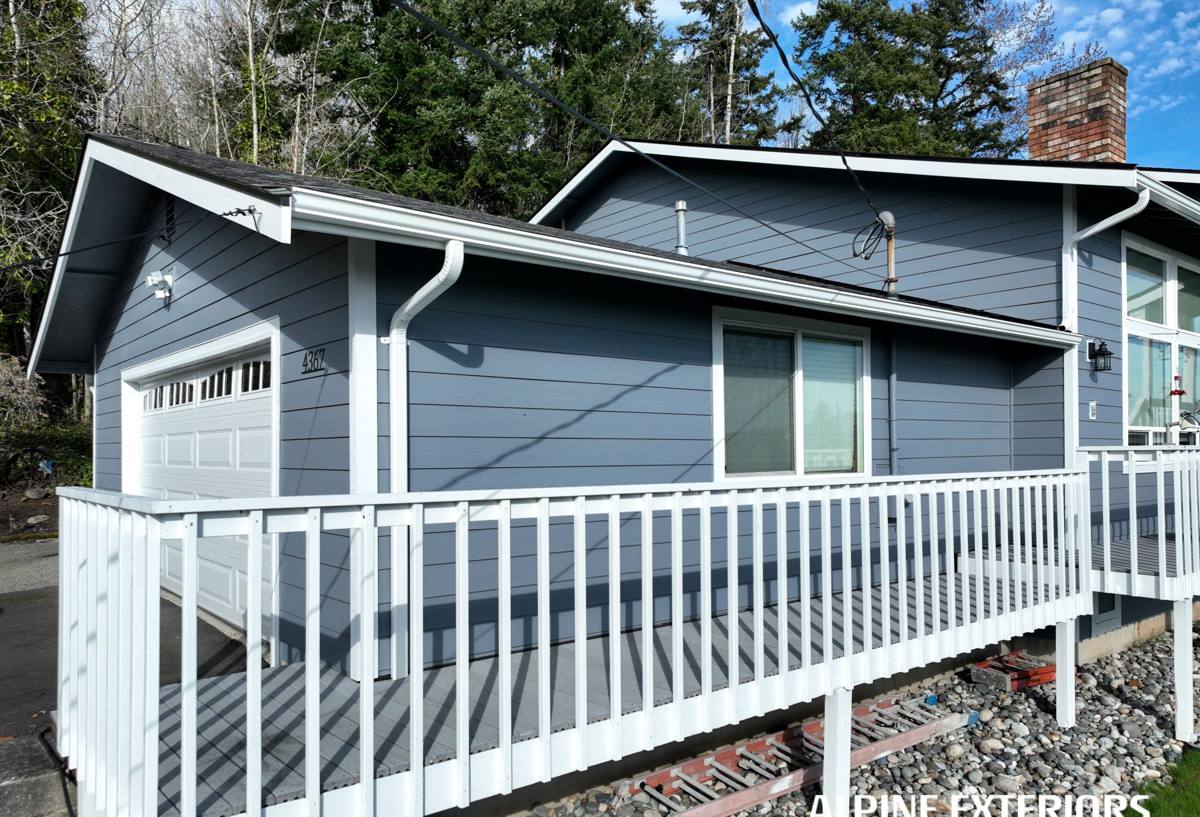
Why Lynden Roofs Wear Differently Than Roofs Inland
Salt Air and Metal Components
Even though Lynden is set back from the water compared to Blaine itself, prevailing winds still carry a measurable amount of salt inland across Whatcom County. Salt exposure accelerates corrosion on exposed metal — flashing, fasteners, vents, and any exposed metal trim. Over a normal roof's lifespan, that corrosion can show up as rust streaking, pinhole leaks at flashing seams, and fasteners that back out or lose their grip on the decking.
Driving Rain and Wind-Driven Water
This region gets rain that doesn't just fall straight down — it comes in sideways during storms off the Strait. That matters for roofing because wind-driven rain can push water up and under shingles or shakes at laps, ridges, and valleys that would stay dry in a calmer climate. Underlayment quality and the detailing at penetrations and valleys matter more here than they would in a drier, calmer part of the state.
Moss and Prolonged Moisture
Moss doesn't just look bad — it holds moisture against the roofing material for weeks at a time, which shortens the life of asphalt shingles and can rot wood shakes from the surface down. Roofs with tree cover or north-facing slopes in the Lynden area are especially prone to this, and a roof replacement is the right time to address the tree cover, ventilation, and drainage issues that caused the moss buildup in the first place — not just install new material on top of the same conditions.
What a Correct Roof Replacement Actually Involves
A roof replacement done right is a system, not a single product. Skipping any one of these steps is how roofs that look fine for the first year or two develop leaks, rot, or premature wear well before they should.
- Full tear-off: Removing all old layers down to the deck so we can actually inspect the sheathing, not roof over hidden damage.
- Deck inspection and repair: Replacing any sheathing that's soft, delaminated, or water-stained before anything new goes down.
- Ice and water shield at vulnerable areas: Eaves, valleys, and penetrations get self-adhering membrane, not just felt, given how much wind-driven rain this area sees.
- Synthetic underlayment across the field: A tear-resistant, water-shedding layer under the primary roofing material.
- Proper flashing at every transition: Chimneys, skylights, sidewalls, and vent pipes — corrosion-resistant metal, correctly lapped with the underlayment and roofing material.
- Balanced attic ventilation: Intake at the eaves and exhaust at the ridge, sized to the attic volume, so moisture doesn't get trapped and shorten the roof's life from underneath.
- Correct fastening: Nail pattern and fastener type matched to the material and wind exposure, not just whatever's fastest to install.
- Gutter and drip edge integration: Making sure water leaving the roof actually gets carried away from the fascia and foundation instead of pooling or running behind the trim.
Choosing a Roofing Material for This Climate
There's no single "best" roofing material for every Lynden home — it depends on the roof's slope, exposure, budget, and how much maintenance the homeowner wants to take on. Here's how the common options stack up against local conditions specifically.
| Material | Moss Resistance | Salt/Wind Exposure | Maintenance | Typical Lifespan |
|---|---|---|---|---|
| Architectural asphalt shingle | Moderate — benefits from algae-resistant granules | Good with proper fastening and wind rating | Low to moderate; periodic moss treatment recommended | 25–30 years |
| Standing seam metal | Very good — sheds moss buildup, few horizontal laps to trap debris | Excellent with coastal-rated coatings and stainless fasteners | Low | 40–50+ years |
| Cedar shake | Poor without diligent upkeep — traditional wood holds moisture | Fair; needs treatment against rot and salt exposure | High — regular treatment and moss removal required | 20–30 years with upkeep |
| Composite/synthetic shake | Good — engineered to shed water and resist moss better than wood | Good | Low to moderate | 30–50 years |
We'll talk through these trade-offs honestly during an estimate. A steep, shaded, north-facing roof under mature trees is a different conversation than a simple, well-exposed gable roof, even on the same street.
Reading the Signs: When Lynden Homeowners Should Consider Replacement
- Granule loss showing up in gutters or at downspout outlets
- Shingles that are cupping, curling, or cracking, especially on south and west-facing slopes
- Moss or dark streaking that returns within a season or two of cleaning
- Soft spots or sagging visible from the ground or in the attic decking
- Daylight visible through the roof deck from inside the attic
- Flashing that's rusted, lifted, or separated from the roofing material
- Interior water stains on ceilings or in the attic after a heavy storm
- A roof that's simply reaching the end of its rated lifespan, regardless of visible damage
Our Process for a Lynden Roof Replacement
1. On-Site Assessment
We walk the roof, check the attic, and look at drainage and tree cover around the home — the things that actually determine how long a new roof will last in this climate, not just what's visible from the street.
2. Straightforward Proposal
You get a clear scope of work and material options, with the trade-offs explained plainly. No pressure tactics, no one-day-only pricing.
3. Scheduling Around the Weather
Given how much rain this region gets, we plan tear-off and dry-in carefully so your home isn't left exposed longer than necessary, and we build in reasonable buffer for weather delays rather than rushing the job to hit an arbitrary date.
4. The Install
Tear-off, deck repair, underlayment, flashing, ventilation, and the finished roofing material — installed in that order, inspected at each stage rather than just at the end.
5. Final Walkthrough
We walk the finished roof and the site cleanup with you before considering the job done, and make sure you understand any maintenance recommendations specific to your property's exposure and tree cover.
Why Local Experience in Lynden and Blaine Matters
Roofing crews who mostly work drier, inland climates sometimes under-detail the parts of a roof that matter most out here — valley protection, ridge ventilation balance, and flashing at wall intersections. A crew that regularly works Whatcom County roofs already knows which slopes on which orientations tend to hold moss, which fastener types actually hold up to years of salt air, and how local permitting and inspection typically go. That local pattern recognition is worth more than a lower bid from a crew that's never dealt with a coastal-influenced climate before.
We also stand behind the work with a workmanship warranty in addition to manufacturer material warranties, and we're available if a question comes up after the job is finished — not just during the sales process.
What This Typically Costs
Roof replacement pricing depends on roof size, pitch, current layer count, deck condition, and material choice, so we won't quote a number without seeing the roof. In general terms, straightforward asphalt shingle replacements sit at the more affordable end, while standing seam metal and composite shake systems cost more upfront but typically ask less of you in maintenance and last considerably longer. We'll lay out the real numbers for your specific roof during the estimate, along with the reasoning behind them.
If your Lynden or Blaine area roof is showing its age, moss is winning the battle every winter, or you just want an honest read on how much life it has left, we're glad to come take a look. Use the form below to request a free, no-pressure estimate.