 Blaine Exterior
 What Peace Arch Homes Are Up Against
Peace Arch sits close enough to the water and the border that its siding takes a different kind of beating than a house twenty minutes inland in Whatcom County. Salt-laden air off the Strait works on fasteners, trim, and any paint film that isn't built to handle it. Driving rain, pushed sideways by wind off the water, finds every gap in flashing and caulk that a calmer climate would never expose. And the long, wet, low-sun stretch of fall through spring here gives moss and algae months to establish themselves on anything with texture or shade — north-facing walls especially.
None of that is exotic. It's just the normal cost of living this close to the Salish Sea. But it means the siding on a Peace Arch home isn't a cosmetic choice — it's the first line of defense against moisture intrusion, and the product and installation both have to be matched to what this specific location actually does to a house year-round.
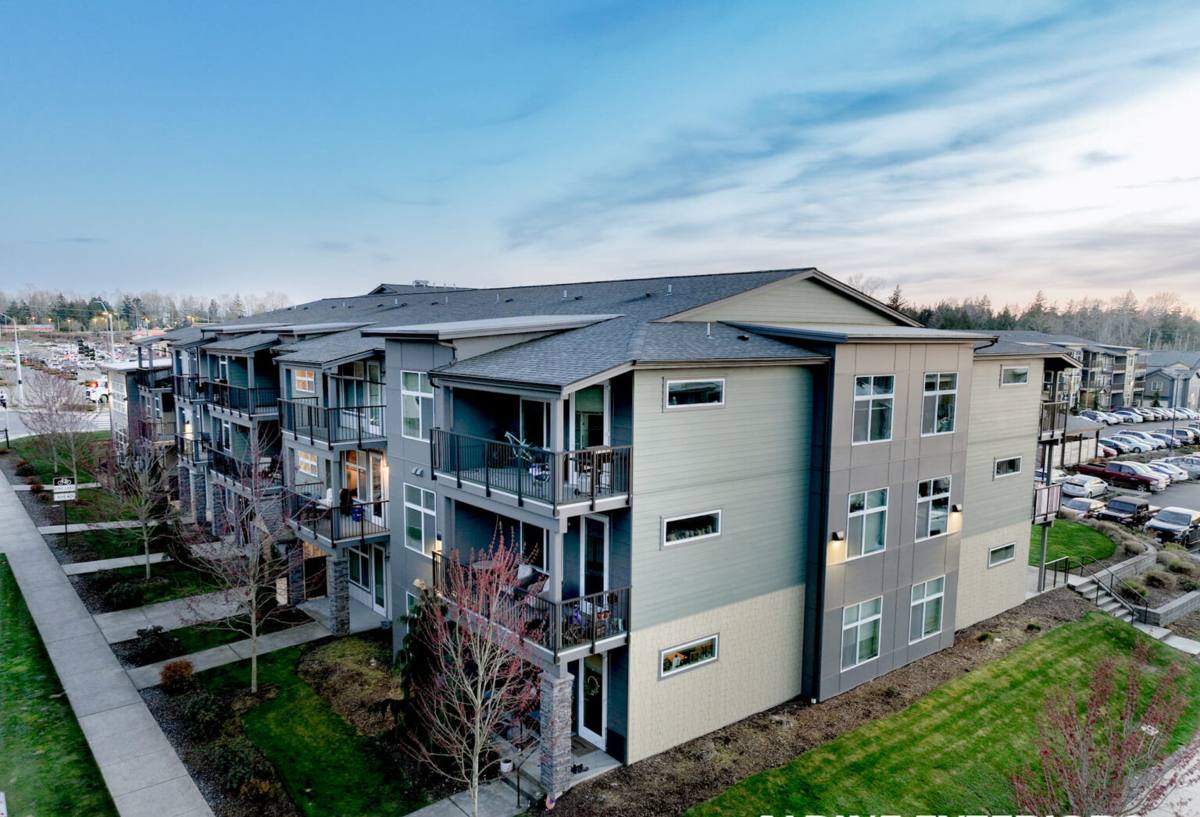
Why This Crew Installs Only James Hardie Here
We don't install vinyl, LP SmartSide, primed wood, or other fiber cement brands like Allura or Cemplank. That's not a marketing line — it's a standard we set because of what we've seen happen to siding in exactly this kind of environment, and because James Hardie is the product we can stand behind for the long haul.
Non-combustible fiber cement
James Hardie siding is fiber cement — sand, cement, and cellulose fiber — which means it doesn't feed a fire the way wood-based or vinyl products can, and it doesn't warp, rot, or feed insects the way untreated wood trim does. That matters everywhere, but it's a real asset in a coastal, moisture-heavy climate where lesser materials are already fighting rot on top of everything else.
ColorPlus factory finish
Most Hardie siding we install goes on with the ColorPlus finish — a color baked on at the factory under controlled conditions, rather than field-painted on site. In a salt-air environment, that matters more than it sounds like it should. Field-applied paint has to bond to a fiber cement substrate on a job site, in whatever weather the crew got that week. A factory finish is more consistent, resists fading and chipping better, and comes with its own finish warranty separate from the substrate warranty.
Climate-engineered HZ product lines
James Hardie makes region-specific formulations (HZ5, HZ10, and so on) engineered for different moisture and freeze-thaw conditions across the country. We spec the version built for the Pacific Northwest's wet, mild, marine-influenced climate — not a generic national product. That's a real distinction, not a sales detail: the wrong regional formulation on a coastal home is a maintenance problem waiting to happen.
What a Correct Installation Actually Involves
The product is only half the equation. Fiber cement siding installed wrong will fail in a wet climate just as surely as the wrong product installed perfectly. Most siding failures we get called out to inspect on older homes near the water trace back to installation shortcuts, not the material itself.
Rain screen and weather barrier detailing
A correctly built wall assembly gives water a path to drain and dry out behind the siding, not just a barrier that's supposed to stop it entirely. That means a proper weather-resistive barrier, correctly lapped and taped, and in many cases a rain screen gap that lets the wall breathe. Skipping this is invisible on install day and expensive five years later.
Flashing and fastener spec
Every window, door, and roof transition needs flashing detailed to shed water outward, not trap it against the sheathing. Fasteners need to be corrosion-resistant and driven to Hardie's spec — not just wherever a nail gun happens to land — because a fastener that backs out or corrodes prematurely opens a path straight to the wall cavity.
Clearances from grade, decks, and roof lines
Hardie's own installation instructions call for minimum clearances between the bottom of the siding and grade, roofing, decks, and patios. In a region that gets sustained wet weather, we don't shave those clearances to make a house look a certain way — they exist specifically to keep splash-back and standing moisture off the bottom edge of the siding, which is where premature failure almost always starts.
Choosing the Right Hardie Product Line
James Hardie makes several siding profiles, and the right one for a Peace Arch home depends on the house's style, exposure, and how much detail work (trim, corners, transitions) the design calls for.
| Product | Look | Best suited for | Relative maintenance |
|---|---|---|---|
| HardiePlank lap siding | Traditional horizontal lap | Most single-family homes, classic and craftsman styles | Low — periodic wash, repaint at ColorPlus warranty end if desired |
| HardiePanel vertical siding | Clean vertical lines, often paired with lap or trim | Modern or mixed-material facades, accent walls | Low |
| HardieShingle | Staggered or straight-edge shingle look | Cape Cod, cottage, and shingle-style homes | Low to moderate — more surface detail can hold moisture longer if not detailed well |
| Board and batten | Vertical boards with batten strips | Farmhouse and contemporary exteriors, gable accents | Low |
On homes closer to the water and more exposed to wind-driven rain, we tend to steer clients toward simpler profiles with fewer moisture-catching details on the most exposed elevations, and reserve heavier-texture products like shingle-style siding for more sheltered walls.
Color and Curb Appeal for This Neighborhood
ColorPlus finishes come in a range of coastal-friendly tones, from deep grays and blues to warmer neutrals, and Hardie's trim products let us match or contrast siding color cleanly. We generally recommend homeowners in this area lean toward finishes with proven UV and salt-air performance rather than picking strictly on trend — a color that looks right today but fades unevenly in five years of coastal sun and salt spray isn't a win. We're happy to walk through samples and talk through what tends to hold up best on homes with this kind of water exposure.
Our Process, Start to Finish
- Walkthrough and assessment — we look at existing siding condition, trim, flashing, moisture history, and exposure on each elevation of the home.
- Product and profile recommendation — based on the house's style and exposure, not a one-size answer.
- Written estimate — scope, product line, and what the job includes, with no pressure to sign on the spot.
- Prep and tear-off — removal of old siding, inspection of sheathing for hidden rot or moisture damage before anything new goes on.
- Weather barrier and flashing installation — the part of the job that determines how the siding performs in ten years, done to spec, not shortcuts.
- Hardie siding installation — fastened, spaced, and clearanced to manufacturer requirements.
- Final walkthrough — trim, caulking, and finish details reviewed with the homeowner before we call it done.
What Moss Season Really Requires From Homeowners
Correctly installed Hardie siding is low-maintenance, not zero-maintenance. In a climate that stays wet and shaded for months at a stretch, a little seasonal attention goes a long way toward protecting the investment.
- Rinse siding annually (garden hose pressure, not a pressure washer aimed at seams or panel edges) to clear pollen, salt residue, and early moss growth
- Keep gutters clear so overflow doesn't run down the face of the siding repeatedly through the wet season
- Trim back vegetation and tree cover that keeps a wall shaded and damp longer than the rest of the house
- Check caulking at trim and penetrations every year or two, since caulk is the first thing to fail, long before the siding itself
- Watch north-facing and shaded walls for early moss or algae — it's easier to clean off early than after it's established
Why Local Installation Experience Matters
A crew that works Blaine and the surrounding Whatcom County coastline regularly already knows how this specific stretch of weather behaves — which elevations of a house take the worst of the wind-driven rain, how fast moss establishes on shaded siding here versus further inland, and where salt air tends to cause the earliest wear. That's not something a general contractor from outside the area picks up on a single job. It shows up in the flashing details, the clearances, and the product choices we make before the first piece of siding ever goes up.
If your Peace Arch home needs new siding, or you're not sure whether what's on the walls now is holding up the way it should, we're glad to take a look and give you a straight answer. Reach out for a free, no-pressure estimate — we'll walk the exterior with you and tell you what we'd actually recommend, not just what's easiest to sell.