 Blaine Exterior
 Ferndale's Roofs Work Harder Than Most
Ferndale sits close enough to the water and far enough north that its roofs deal with a combination most inland homes never see: salt-laden air drifting in off the Strait, long stretches of driving rain, and a moss season that can run nine months out of the year. None of these things destroy a roof overnight. What they do is work on it slowly, in the seams and low spots and shaded valleys, until a small problem becomes a leak you notice from the inside.
That slow-motion damage is why roof repair in this part of Whatcom County is a different job than roof repair somewhere dry and inland. A repair crew here needs to know what salt air does to fasteners and flashing, how wind-driven rain finds its way under lapped shingles, and where moss tends to build up first on a typical Ferndale roofline. Get those details right and a repair holds for years. Miss them and the same spot leaks again the next wet season.
What Roof Repair Actually Means
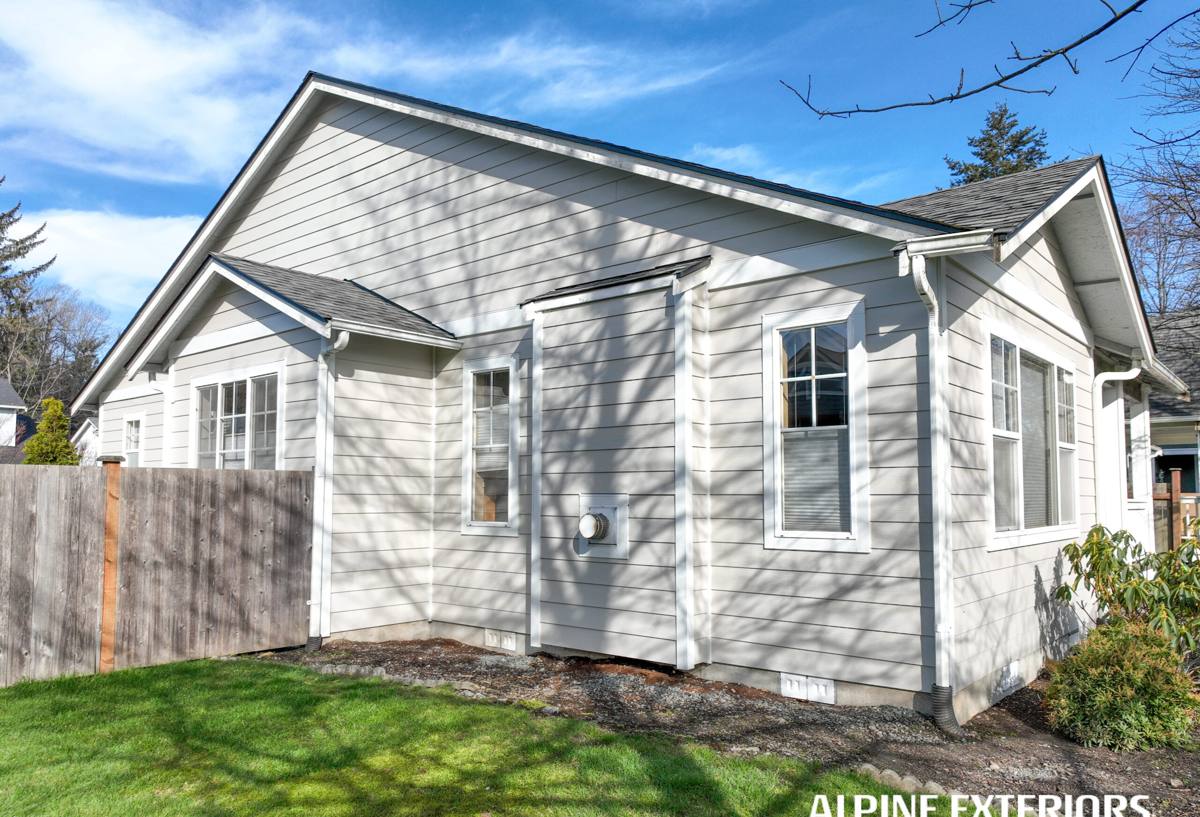
Roof repair is not a scaled-down version of a full re-roof. It's a targeted fix aimed at a specific problem area, done in a way that doesn't disturb or shorten the life of the roof around it. Done right, it should look and perform like it was never touched — not like a patch.
When Repair Is the Right Call
Repair makes sense when the damage is localized: a section of lifted or cracked shingles, a flashing detail that's failed, a soft spot from a slow leak, or moss-related wear that hasn't spread across the whole field of the roof. If the underlying roof deck, structure, and majority of the roofing material are still sound, repair is almost always the more cost-effective path.
When It's Not
If we find widespread granule loss, multiple failed layers, rot in the decking over a large area, or a roof that's simply reached the end of its material life, we'll say so plainly. A repair on a roof that's structurally past its service life doesn't save money — it just delays a bigger job and adds a second cost on top of it later.
The Problems We See Most Often in Ferndale
Moss and Trapped Moisture
Moss doesn't just sit on the surface — its roots work into the texture of shingles, and the mat it forms holds water against the roofing material far longer than open air would. On roofs with north-facing slopes or shade from trees, moss can build up faster than homeowners expect, and by the time it's visible from the ground it's often been established for a season or more.
Wind-Driven Rain Intrusion
Storms coming off the water don't just fall straight down — they push rain sideways, into laps and seams that are designed to shed water moving vertically, not horizontally. This is a common cause of leaks that show up well away from the actual entry point, since water travels along the underlayment or decking before it finds a way through the ceiling.
Flashing and Fastener Corrosion
Salt air accelerates corrosion on exposed metal — flashing around chimneys, vents, and valleys, plus the fasteners holding the roofing material down. Once flashing starts to corrode or pull away, it stops doing its one job: keeping water out of the transitions where two roof planes or materials meet. Those transition points are where the large majority of leaks actually start.
Granule Loss and UV Wear
Between rain events, Whatcom County still gets enough sun exposure to gradually wear down the protective granule layer on asphalt shingles, especially on south and west-facing slopes. Thinning granules mean less UV protection for the layers underneath, which shortens the usable life of that section of roof.
What a Correct Repair Involves
- An honest inspection of the full roof, not just the spot the homeowner called about — leaks often show up inside the house far from where water is actually entering
- Identifying the real entry point, which may mean checking attic decking, insulation, and framing for water tracking
- Removing and replacing only the damaged material, matching existing shingle type, color, and exposure as closely as possible
- Replacing compromised flashing and fasteners rather than resealing them, since corroded metal will fail again regardless of how much sealant is applied
- Confirming proper moss treatment and removal in affected areas, not just a surface clean
- Checking that ventilation in the area isn't contributing to trapped moisture
- A final walk-through explaining exactly what was done and why
Our Process for Ferndale Homeowners
We keep the process simple and upfront, because most homeowners calling about a roof repair are dealing with a leak or a worry, not a project they've been planning for months.
1. Inspection
We walk the roof (weather permitting) and check the attic side when possible, so the diagnosis is based on what's actually happening, not a guess from the ground.
2. Straight Answer
We tell you what's wrong, what caused it, and whether repair or something more is the right call — including the reasoning, not just a recommendation.
3. Written Estimate
You get a clear scope of work and price before anything happens, with no pressure to decide on the spot.
4. The Repair
We do the work, protect your landscaping and gutters during the job, and clean up thoroughly — old shingle debris and moss buildup don't get left behind.
5. Follow-Up
We explain what we found and what to watch for going forward, including any maintenance that will extend the life of the rest of the roof.
Repair vs. Replacement: How to Think About the Decision
| Factor | Points Toward Repair | Points Toward Replacement |
|---|---|---|
| Age of roof | Well within expected material lifespan | At or near end of expected lifespan |
| Extent of damage | Localized to one section or detail | Spread across multiple slopes |
| Decking condition | Solid, no rot found | Soft spots or rot in multiple areas |
| Moss history | Recent buildup, treated early | Long-term moss damage under the surface |
| Number of past repairs | First or second repair in this area | Repeated repairs to the same section |
None of these factors decide things alone — we look at the whole picture before recommending either path, and we'd rather tell you a repair is enough than talk you into something bigger than you need.
Signs You Should Have a Roof Looked At
- Visible moss growth, especially thick or spreading patches
- Shingles that look cupped, curled, or are missing granules in patches
- Water stains on ceilings or upper walls, particularly after a windy storm
- Daylight visible through the attic decking
- Sagging or soft-feeling areas underfoot in the attic
- Rust streaks below flashing or vent pipes
- Gutters filling with granules or moss debris after every rain
Why It Matters That We Already Work in Ferndale
A crew that repairs roofs across Whatcom County regularly sees how the local climate actually behaves on real roofs — not just in general terms, but on the specific roof pitches, tree cover, and exposure patterns common in Ferndale neighborhoods. That familiarity shows up in small decisions: knowing which flashing details tend to fail first in this kind of weather, recognizing early-stage moss damage versus cosmetic staining, and understanding how wind-driven rain off the Strait behaves differently than a straight-down downpour.
It also means a faster, more accurate diagnosis. Roofs in this area develop a fairly recognizable set of failure patterns, and a crew that sees them often can usually identify the real problem on the first visit rather than guessing and coming back.
After the Repair: Keeping It From Happening Again
A good repair fixes the immediate problem. Keeping it fixed usually comes down to a short list of maintenance habits suited to this climate:
- Scheduling moss treatment before it becomes a heavy mat, not after
- Keeping gutters and downspouts clear so water isn't backing up under the roof edge
- Trimming back tree cover that keeps sections of the roof shaded and damp longer than the rest
- Having flashing and fasteners checked periodically, since salt-air corrosion is gradual and easy to miss until it fails
- Addressing small leaks early, before wind-driven rain has a chance to spread the damage further under the surface
If you're dealing with a leak, moss buildup, or just want an honest look at where your roof stands, we're happy to come out for a free, no-pressure estimate — no obligation, just a straight assessment and a clear price if repair work is needed. The form below is the easiest way to get started.