 Blaine Exterior
 Homes in the Everson area near Blaine sit close enough to the water and the Cascade foothills that roofs here take a different kind of beating than roofs twenty miles inland. Salt-laden air off the Strait works on metal fasteners and flashing year-round. Driving rain off Puget Sound finds every weak seam. And the long, wet moss season that runs from fall through spring turns any north-facing slope or shaded valley into a slow-motion problem if the roof underneath isn't built to handle it. A roof replacement out here isn't just "put new shingles on" — it's a chance to correct the details that let those three forces win in the first place.
Why Everson Roofs Wear Differently Than Roofs Elsewhere in Whatcom County
Everson's mix of coastal exposure and rural tree cover creates conditions that stress a roof from two directions at once. The salt air corrodes exposed metal — nail heads, flashing edges, gutter hangers — faster than it would twenty or thirty miles inland. At the same time, mature tree cover and persistent Pacific moisture keep shaded roof sections damp for days after a storm, which is exactly what moss and moss-related decking rot need to take hold.
We see this combination show up as a specific failure pattern: shingles that look intact from the ground but have lost granules and gone brittle along the eaves and valleys, moss colonies established on the north slope that are quietly lifting shingle tabs and holding moisture against the deck, and corroded fasteners or flashing that let water in at penetrations — vent pipes, chimneys, skylights — long before the field of the roof itself fails.
What This Means for Timing a Replacement
A roof that would last its full rated lifespan in a drier, inland climate often needs replacement several years sooner out here if it wasn't built or maintained with this climate in mind. Waiting for obvious leaks usually means the decking underneath has already absorbed damage that adds cost to the job.
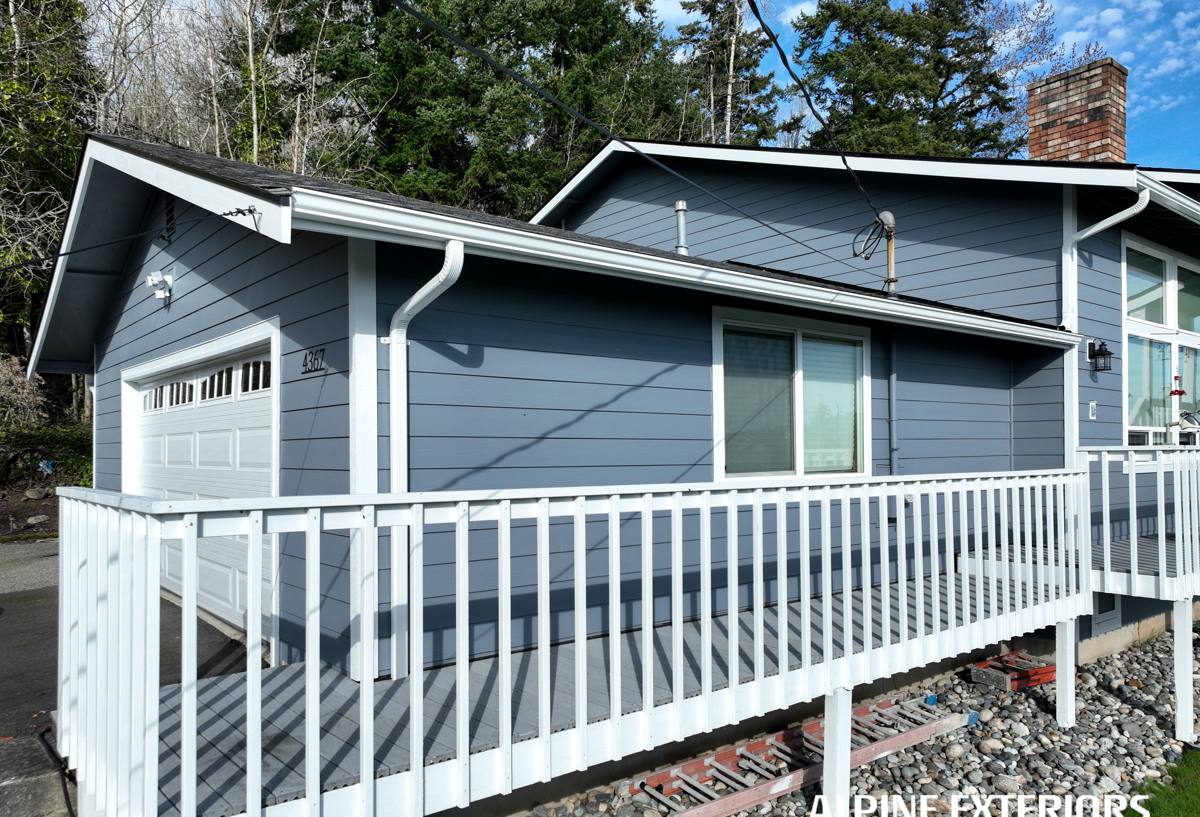
Signs an Everson Roof Has Reached Replacement Stage
- Moss coverage on more than a small patch of the roof, especially on north- or shade-facing slopes
- Granules collecting in gutters or at downspout outlets — a sign the shingle surface is wearing away
- Shingles that are curling, cupping, or cracking, particularly along the edges most exposed to wind-driven rain
- Rusted or corroded flashing around chimneys, skylights, and vent pipes
- Soft spots or sagging when walking the roof, which usually points to decking that has absorbed moisture
- Daylight visible through the roof deck from inside the attic, or water stains on attic sheathing
- Repeated patch repairs in the same areas year after year — a sign the underlying problem was never fixed
Any one of these on its own might just mean a repair. Several together, especially on a roof that's already past the midpoint of its expected life, is usually the point where replacement costs less over time than continuing to patch.
What a Correct Roof Replacement Involves Here
A replacement done for this climate isn't just a materials swap. The parts of the job that matter most in Everson's conditions are the ones that don't show once the roof is finished.
Full Tear-Off and Deck Inspection
We remove the existing roofing down to the deck rather than layering over it. That's the only way to actually find and address moisture damage from long-term moss growth or past leaks — sections of soft or delaminated decking get replaced before anything new goes down. Roofing over a compromised deck just locks the problem in.
Underlayment Built for Wet Climates
Given how much sustained rain this area gets, we use synthetic or self-adhering underlayment products designed for wet-climate performance, with extra attention — and often ice-and-water shield-style membrane — at eaves, valleys, and anywhere water tends to pool or back up.
Corrosion-Resistant Flashing and Fasteners
Given the salt exposure, we don't use standard-grade fasteners and flashing on these jobs. We spec corrosion-resistant metal at chimneys, skylights, sidewalls, and vent penetrations, because these are the points where a coastal roof almost always fails first if the hardware isn't rated for the air it's sitting in.
Ventilation That Actually Moves Air
Trapped attic moisture accelerates deck rot and gives moss and mildew a head start from underneath. We check and correct intake and exhaust ventilation as part of the replacement — a new roof installed over poor ventilation will show the same moss and moisture problems again within a few years.
Moss-Resistant Details on Shaded Slopes
On slopes that sit in shade most of the day, small design choices reduce how fast moss re-establishes: keeping the roof edge clean of debris traps, appropriate metal edging in valleys, and material choices with better resistance to sustained moisture. We can't eliminate moss risk from a shaded, wet-climate roof, but we can build the replacement so moss stays a surface maintenance issue instead of a structural one.
Material Options and Trade-Offs for This Climate
| Material | Performance in Salt Air & Moss Season | Trade-Offs to Know |
|---|---|---|
| Architectural asphalt shingle | Solid performer with the right underlayment and ventilation; moderate moss resistance depending on granule type | Needs periodic moss treatment on shaded slopes; lifespan shortened by neglect more than by the climate itself |
| Metal roofing | Sheds moisture fast and resists moss better than most materials; requires corrosion-resistant fasteners and coatings near salt air | Higher upfront cost; installation quality matters more since fastener and seam errors are harder to fix later |
| Synthetic/composite shingle | Good moisture resistance, low moss uptake on many products | Product quality varies widely; we're selective about which lines we install and why |
| Cedar shake | Traditional Pacific Northwest look but high maintenance in a wet, moss-prone climate | Requires regular treatment and inspection; we're upfront that this is a higher-maintenance choice here, not a failure of the product itself |
Our Process for an Everson Roof Replacement
- On-site inspection — we walk the roof and attic, document moss coverage, flashing condition, and any signs of deck moisture
- Honest scope and estimate — you get a clear breakdown of what needs replacing versus what can be repaired, with material options suited to your specific slope exposure and shade
- Tear-off and deck assessment — full removal of old roofing, with any compromised decking identified and replaced
- Underlayment and flashing installation — wet-climate underlayment and corrosion-resistant flashing at every penetration
- Ventilation check and correction — intake and exhaust balanced to keep the new roof dry from underneath
- Material installation — installed to manufacturer spec, with attention to the details that matter most in coastal, moss-prone conditions
- Final walkthrough — we go over what was done and what routine maintenance, if any, will keep the roof performing
Why a Local Crew Matters for This Job
A roof replacement quote from a crew unfamiliar with Whatcom County's coastal conditions often looks identical to a quote for a roof in a dry inland climate — same shingle line, same fastener grade, same underlayment spec. That's where problems start. A crew that already works Everson and the broader Blaine area knows which slopes on a given property are going to hold moisture longest, which fastener and flashing grades actually hold up to salt exposure over years rather than months, and which ventilation mistakes show up as moss and rot on roofs in this specific area.
That familiarity also means less guesswork during the inspection. We've seen how moss establishes on shaded roofs in this part of Whatcom County, what deck damage from long-term moisture usually looks like once shingles come off, and which details get skipped by crews that don't do a lot of work in salt-air conditions. That's the difference between a roof that needs the same conversation again in eight years and one that doesn't.
Maintenance That Extends the Life of a New Roof Here
- Keep gutters and valleys clear of needles and debris, especially heading into the wet season
- Have shaded slopes checked for early moss growth once a year rather than waiting until coverage is heavy
- Trim back tree limbs that keep sections of the roof in constant shade and slow drying
- Address any moss treatment promptly rather than letting it establish — it's far easier to manage early
- Have flashing and fasteners inspected periodically for early signs of corrosion, particularly after the first few winters
If your roof in the Everson area is showing moss, granule loss, or age, we're happy to take a look and give you a straightforward assessment of where it stands. Reach out for a free, no-pressure estimate — no obligation, just an honest read on what your roof needs.