 Blaine Exterior
 Deck Replacement in Grandview: Built for What This Climate Actually Does
Homes in the Grandview area near Blaine sit in a stretch of Whatcom County where the weather never really lets a deck rest. Salt-tinged air off the water works into fasteners and metal connectors. Driving rain comes in sideways during winter storms, finding its way under boards and around ledger flashing that wasn't detailed correctly the first time. And because temperatures stay mild and damp for most of the year, moss and algae get a long runway to establish themselves on any surface that holds moisture — decking included. A deck built for a drier inland climate, or built to a minimum standard, tends to show its age here faster than homeowners expect.
Replacing a deck in this environment isn't just about swapping old boards for new ones. It's about correcting whatever let the last deck fail and building the replacement so the same problems don't come back in five years. That's the standard we hold every Grandview deck replacement to.
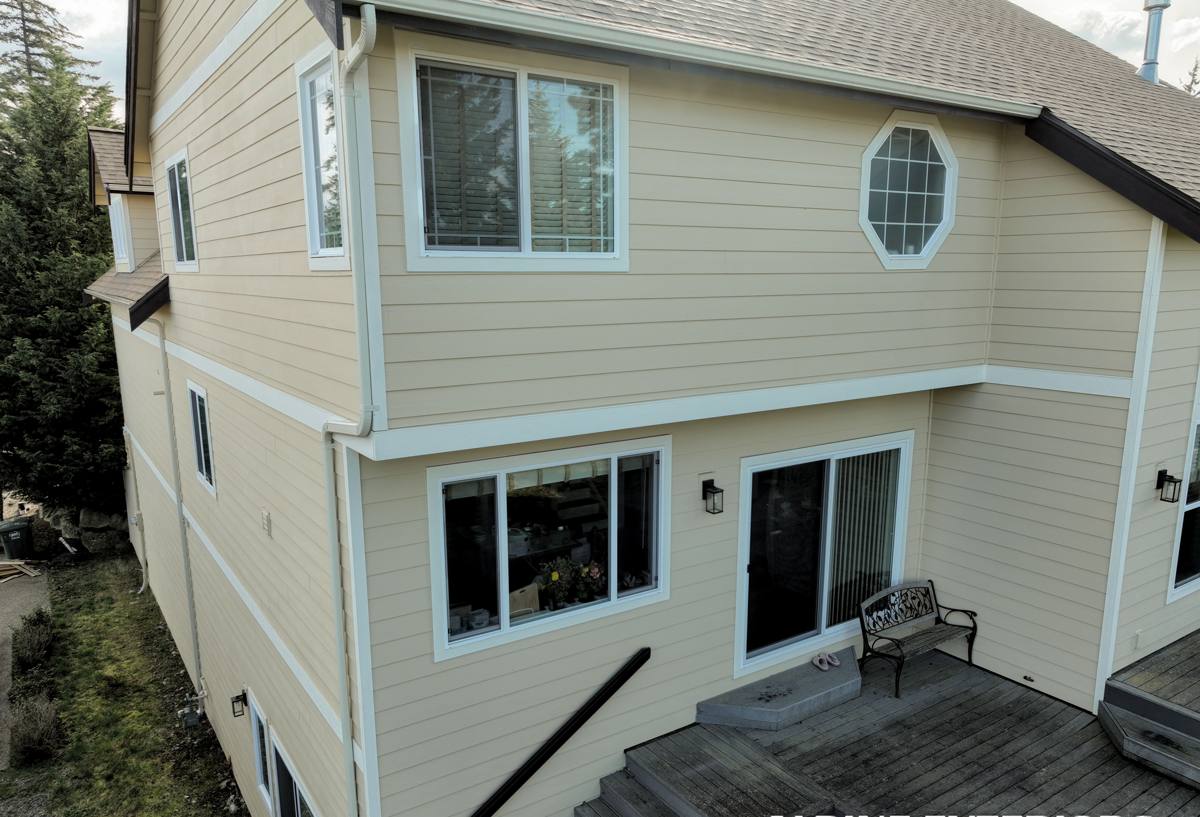
Signs a Grandview Deck Needs Replacing, Not Just Patching
Deck repair has its place, but there's a point where patching individual boards or re-tightening railings just delays a bigger problem. In our experience working this area, these are the signs that point toward full replacement rather than repair:
- Soft, spongy, or spalling spots in the decking or framing when you press on them, especially near the house or around post bases
- Rust streaks running down from screws, bolts, or joist hangers — a sign the hardware is corroding from the inside out
- Persistent moss or dark staining that comes back within weeks of cleaning, especially on north-facing or shaded sections
- Visible gaps or separation where the deck meets the house, which often means the ledger board or flashing has failed
- Railings or stairs that flex, wobble, or feel less solid than they used to
- A deck older than 15–20 years that was built with older fastening or flashing methods, even if it "looks" fine on the surface
Any one of these on its own might be repairable. Several at once, or problems concentrated at the ledger and framing level, usually mean the structure has been compromised long enough that a rebuild is the more honest recommendation.
What a Correct Deck Replacement Actually Involves
Starting Below the Surface
The parts of a deck nobody sees — footings, posts, framing, and the ledger connection to the house — determine how long the whole structure lasts. In a climate that stays wet for months at a time, we pay particular attention to:
- Footings set below frost depth and sized for the actual load, not just matched to whatever was there before
- Post bases that keep wood off standing water and allow drainage instead of trapping it against concrete
- Ledger flashing installed as a proper water-shedding system — not just caulked and hoped for — since this is the single most common failure point on older decks tying into a house wall
- Joist protection using tape or flashing on cut ends and top edges, where untreated wood soaks up moisture fastest
Getting the Fasteners Right
Salt air accelerates corrosion on standard fasteners faster than most homeowners realize. We use hardware rated for coastal and treated-lumber exposure — stainless steel or coated fasteners matched to the connector manufacturer's specification — rather than whatever is cheapest at the box store. Mismatched metals between fasteners and connectors can actually speed up corrosion through galvanic reaction, so consistency matters as much as quality.
Decking Materials: Honest Trade-Offs for This Climate
There's no single "best" decking material — there's a best fit for how a homeowner wants to use and maintain their deck. Here's how the common options actually perform in a wet, salt-air, moss-prone environment like Grandview's:
| Material | How It Handles This Climate | Maintenance Reality |
|---|---|---|
| Pressure-treated wood | Affordable and strong, but end grain and fastener holes stay vulnerable to moisture intake unless sealed and re-sealed | Annual cleaning and re-staining or sealing to keep moisture out and moss from taking hold |
| Cedar | Naturally rot-resistant and handles moisture well, but softens over time under constant damp exposure | Periodic sealing; shows weathering faster in shaded, moss-prone spots |
| Composite decking | Resists rot and doesn't absorb water like wood, but can still grow surface mildew or algae in shaded, damp areas if not cleaned | Occasional washing; no sealing or staining required |
| PVC decking | Fully moisture-resistant with no organic material for mold or moss to feed on | Lowest maintenance of the common options; periodic rinse-off is usually enough |
We won't tell a homeowner that a $12 composite board and a $6 treated board perform the same — they don't, and the difference shows up over years, not months. What we will do is walk through what each material actually costs to own over time, including maintenance, so the choice is an informed one rather than a guess.
Why We're Cautious About Certain Wood Products in This Environment
Some lower-grade or thin-profile wood decking products look fine on day one but aren't well suited to a climate that stays wet as long as this one does. Our concern isn't the wood itself — it's that thinner boards and lower moisture-resistance ratings mean more frequent sealing, more cupping and checking over time, and a shorter realistic lifespan before replacement comes around again. We'll always tell a homeowner honestly if a product they're considering is going to demand more upkeep than they're expecting, rather than let them find out the hard way.
Railings and Surface Details That Matter Near the Water
Railings take a lot of abuse in coastal-adjacent air — metal balusters and cable rail hardware are especially prone to corrosion if the wrong grade of stainless or coated steel is used. We spec hardware rated for the exposure, not just what happens to be in stock. On the deck surface itself, board spacing and drainage gaps matter more here than in a drier climate: too tight, and debris traps moisture against the board edges; too loose, and the deck feels unfinished. We set spacing based on the specific material's expansion behavior in wet, cool conditions.
Our Deck Replacement Process
- On-site evaluation — we assess the existing structure, ledger connection, footings, and drainage, and tell you plainly whether repair or replacement makes sense
- Material walkthrough — we go over decking, railing, and hardware options with real maintenance and cost trade-offs, not a sales pitch toward the most expensive option
- Permitting — where the scope requires it, we handle the permit process with the local jurisdiction so the finished deck is built to code, not just to "how it was before"
- Demolition and disposal — full removal of the old structure, checking the ledger wall and framing behind it for hidden water damage before anything new goes up
- Rebuild — footings, framing, flashing, decking, and railings installed in that order, with inspections at the structural stage before decking closes it up
- Final walkthrough — we go over the finished deck with you, including basic care guidance specific to the material you chose
Permits and Local Requirements
Deck replacement in Blaine and unincorporated Whatcom County generally requires permitting once the structure exceeds a certain height or size, particularly for anything attached to the house or built with guardrails. Requirements can also depend on setback from property lines and whether the deck sits within a shoreline or critical area buffer, which is worth checking early given how much of the area near Grandview is close to water. We handle this step as part of the job rather than leaving a homeowner to sort it out with the county on their own.
What Deck Replacement Costs Depend On
We won't quote a number without seeing the site, but these are the factors that actually move the price:
| Factor | Why It Matters |
|---|---|
| Deck size and height off the ground | Larger and taller decks need more framing, footings, and railing to meet code |
| Decking material chosen | Treated wood, cedar, composite, and PVC span a wide cost range, both upfront and long-term |
| Condition of the existing structure | Hidden rot at the ledger or framing found during demo can add scope once uncovered |
| Railing and stair complexity | Multiple stair sections, custom railing, or cable rail add labor and hardware cost |
| Site access | Decks over slopes, water, or tight side yards take longer to build safely |
| Permitting scope | Larger or attached decks typically require permit review and inspection, which adds time but protects the homeowner |
Why a Crew That Already Works in Grandview Makes a Difference
A contractor who works this specific pocket of Whatcom County regularly already knows how the local moisture and salt exposure behaves on a deck year over year — not just in theory, but from having gone back to jobs and seen what held up and what didn't. That experience shapes real decisions: which flashing details actually shed water in driving rain, which fasteners hold up against salt air without staining the decking, and where moss tends to establish itself first so drainage and spacing can be planned around it from the start. It also means familiarity with how permitting works locally, so a project doesn't stall waiting on paperwork nobody anticipated.
If your deck in Grandview is showing rot, rust, persistent moss, or just isn't holding up the way it used to, we're glad to take a look and give you a straight answer about repair versus replacement. Reach out for a free, no-pressure estimate using the form below — we'll walk the deck with you and explain exactly what we find.