 Blaine Exterior
 Siding Built for Dakota Creek's Coastal Exposure
Dakota Creek sits close enough to Semiahmoo Bay and the Strait of Georgia that homes here take a different kind of beating than siding built for an inland Whatcom County lot. Salt-laden air off the water accelerates corrosion on fasteners and trim, wind-driven rain finds every gap in a poorly flashed wall, and the long gray stretch of fall through spring keeps north- and west-facing walls damp enough for moss and algae to take hold. Siding installation in this neighborhood isn't just about picking a color and nailing up boards — it's about choosing a material and a installation method that actually holds up to this specific combination of stressors, year after year.
We install exclusively James Hardie fiber cement siding. That's not a marketing preference — it's a standard we set after years of working exteriors in Blaine and the surrounding coastal areas of Whatcom County, watching which products age gracefully near salt water and which ones need constant attention.
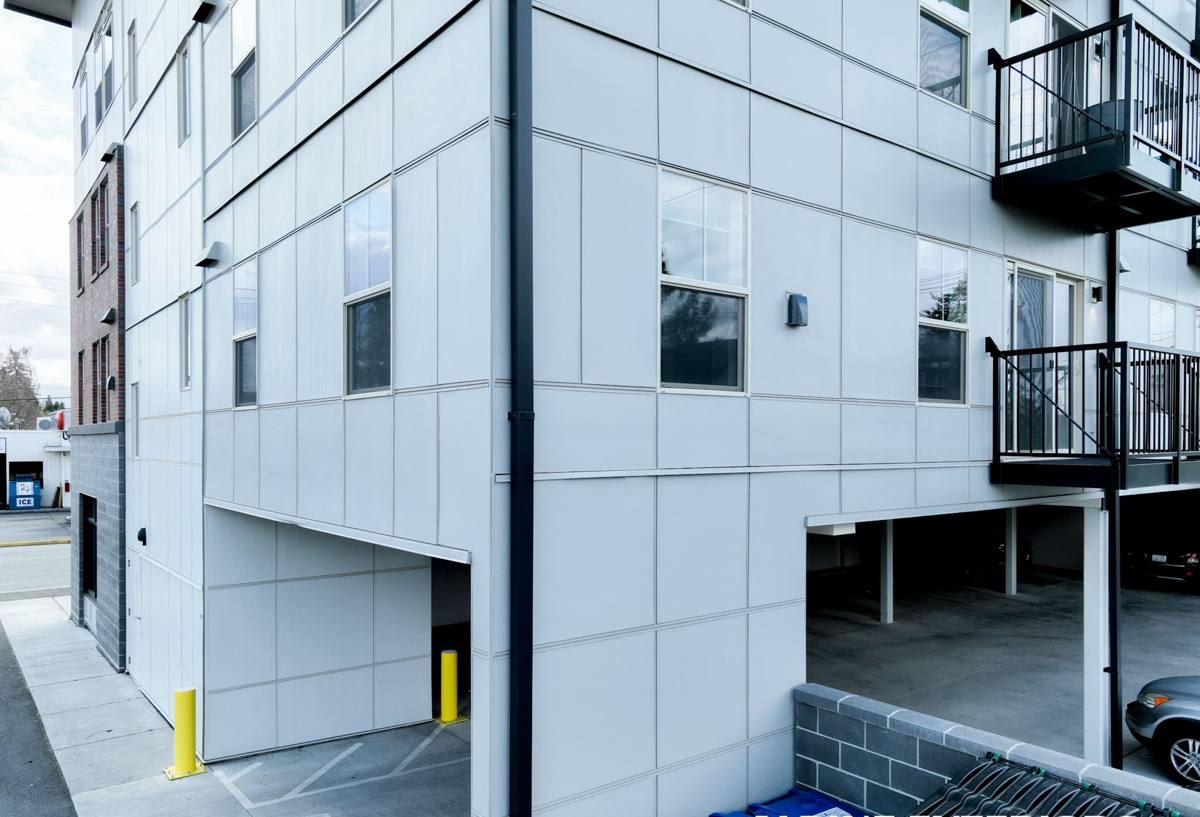
What the Local Climate Actually Does to Siding
Salt Air and Fastener Corrosion
Airborne salt doesn't just sit on the surface of your siding — it works into fastener heads, trim joints, and any exposed metal. Over time, corroding fasteners can streak siding, loosen boards, and create small gaps where water intrudes. Correct installation uses fasteners rated for the coastal exposure and keeps them properly seated and sealed, not just "close enough."
Driving Rain and Wind-Loaded Walls
Storms coming off the water don't just fall straight down — they push rain sideways into walls under real pressure. That means every seam, corner, and penetration (hose bibs, vents, light fixtures) is a potential entry point if it isn't flashed and caulked correctly. A siding job that looks fine in dry weather can still leak the first time a real coastal storm hits it sideways.
Moss, Algae, and the Long Wet Season
Blaine's wet season runs long, and shaded or north-facing walls in tree-lined pockets of Dakota Creek can stay damp for weeks at a stretch. Wood-based and wood-look siding products absorb that moisture, which is exactly the environment moss and algae need to establish. Fiber cement doesn't feed mold or moss growth the way organic materials can, which matters a lot on walls that rarely see direct sun.
Why We Only Install James Hardie Fiber Cement
We get asked why we don't offer vinyl, LP SmartSide, or the cheaper fiber cement alternatives. The honest answer: we've made a professional decision to stand behind one product system because we can control the outcome and the warranty. Here's the comparison as we see it, based on how these materials actually behave in a coastal Pacific Northwest climate.
| Material | Moisture Behavior | Salt-Air Durability | Long-Term Maintenance |
|---|---|---|---|
| Vinyl | Doesn't absorb water, but panels can warp or bow with temperature swings and wind loading | Can fade and become brittle over years of UV and salt exposure | Low upkeep, but limited repairability and shorter realistic lifespan |
| LP SmartSide / engineered wood | Wood-based core is vulnerable to swelling and rot if the factory seal is compromised at a cut edge or seam | Moisture intrusion risk is higher near salt air and driving rain | Requires diligent caulking and paint maintenance to keep the seal intact |
| Budget fiber cement (unbranded or off-spec) | Fiber cement core resists moisture well, but factory finish quality and warranty backing vary widely | Performance depends heavily on finish quality and installation precision | Inconsistent — some products require field-painting sooner than expected |
| James Hardie fiber cement | Non-combustible cement composite, engineered for moisture resistance with climate-specific HZ formulations | Built and tested for demanding coastal and marine-influenced climates | ColorPlus factory finish is warrantied against fading and peeling for years |
James Hardie's HZ5 product line, in particular, is engineered for the Pacific Northwest's combination of moisture, wind, and temperature swings. Paired with a factory-applied ColorPlus finish, it holds its color and seal far better than field-painted alternatives, which matters when your wall spends half the year wet.
What a Correct Siding Installation Involves
The material is only half the equation. Fiber cement siding performs exactly as well as its installation, and that's where a lot of jobs quietly go wrong. A correct installation on a Dakota Creek home includes:
- Inspection and repair of the existing wall sheathing before any new siding goes up — covering rot or soft spots instead of fixing them just traps the problem
- A weather-resistant barrier installed and lapped correctly, shingle-style, so water is directed out and down, never trapped behind the siding
- Proper flashing at every window, door, roofline intersection, and penetration — this is where most water intrusion actually starts
- Correct fastener type, spacing, and depth per Hardie's installation specification, not generic framing nails driven by feel
- Rain-screen or drainage gap detailing where the wall assembly calls for it, especially on shaded or exposed elevations
- Factory-cut and factory-sealed edges used wherever possible, with any field cuts re-sealed per manufacturer spec to protect the cement core
- Proper caulking at trim and corner boards using sealants rated for exterior, coastal exposure
Skipping any one of these steps doesn't show up on day one. It shows up in year three or four, as a soft spot, a streak, or a corner that starts to separate — usually after the crew that installed it is long gone.
Our Process for Dakota Creek Homes
1. On-Site Assessment
We walk the property and look at what actually matters for your specific lot: sun and shade exposure on each wall, proximity to mature trees or damp low spots, current siding condition, and any signs of past water intrusion around windows, trim, or the roofline.
2. Sheathing and Structural Check
Before we talk color or product line, we confirm what's underneath the existing siding is sound. If there's hidden rot or moisture damage, it gets addressed as part of the job — not left behind the new siding.
3. Product and Line Selection
We help you choose the right Hardie product line and profile for your home's style and exposure, including whether HZ5 formulation makes sense for the specific wall orientation and site conditions.
4. Installation to Manufacturer Spec
Our crews install to James Hardie's published installation requirements, not a shortcut version. That's what keeps the manufacturer's warranty valid and what keeps the wall performing the way the product was engineered to.
5. Final Walkthrough
We go over the finished work with you directly, including care and cleaning guidance for a coastal environment, so you know what to expect and what (if anything) needs occasional attention.
Why Local Experience in Blaine Matters
A crew that mostly works inland jobs may not think twice about drainage detailing on a shaded wall or fastener corrosion resistance near salt air — because they haven't had to. Working Blaine and the Dakota Creek area regularly means we've seen how these specific conditions play out on real homes over time, and we build the installation around that experience rather than a generic checklist. That local pattern-recognition is often the difference between a siding job that looks good at handoff and one that still looks good in year ten.
Cost Factors for Dakota Creek Siding Projects
Every home is different, but the main variables that affect the cost of a siding installation in this area are consistent:
| Factor | Why It Matters Here |
|---|---|
| Extent of sheathing repair needed | Coastal moisture exposure means some homes need more substrate repair than others before new siding goes on |
| Home size and wall complexity | More corners, dormers, and penetrations mean more flashing and detail work |
| Product line and profile chosen | Hardie offers multiple plank, shingle, and panel profiles at different price points |
| Site access | Tree cover, slope, or tight lot access near the creek can affect labor time |
| Existing siding removal | Full tear-off versus working with an already-prepped wall changes scope |
We provide a firm, itemized quote after the on-site assessment rather than a rough number over the phone — the variables above are too site-specific to estimate accurately any other way.
Get a Free Estimate
If your Dakota Creek home is due for new siding, or you're seeing early signs of moisture damage, streaking, or moss buildup, we're happy to take a look and give you an honest read on what your home needs. There's no pressure and no obligation — just a straightforward assessment from a crew that installs one product system and knows how to install it right for this climate. Use the form below to request your free estimate.