 Blaine Exterior
 Windows Built for What Sumas Weather Actually Does
Sumas sits in a corner of Whatcom County that gets weather most window manufacturers never design for. You're close enough to the Fraser Valley to catch the cold outflow winds that funnel through the gap between Sumas Mountain and the surrounding hills in winter, and close enough to the Nooksack watershed to get long stretches of driving rain and fog through the fall and spring. Add the humidity that settles into this valley and you get conditions that are hard on window frames, seals, and glass in ways that don't show up right away.
A window that looks fine for the first few years can still be the wrong window for this location. Frame materials that hold moisture, seals that weren't set correctly, or glass packages picked for a milder climate all tend to fail the same way here: slowly, with fogging between panes, soft spots in the frame, or drafts that show up the first time the wind really picks up. Custom windows done right account for all of this from the start, not after something goes wrong.
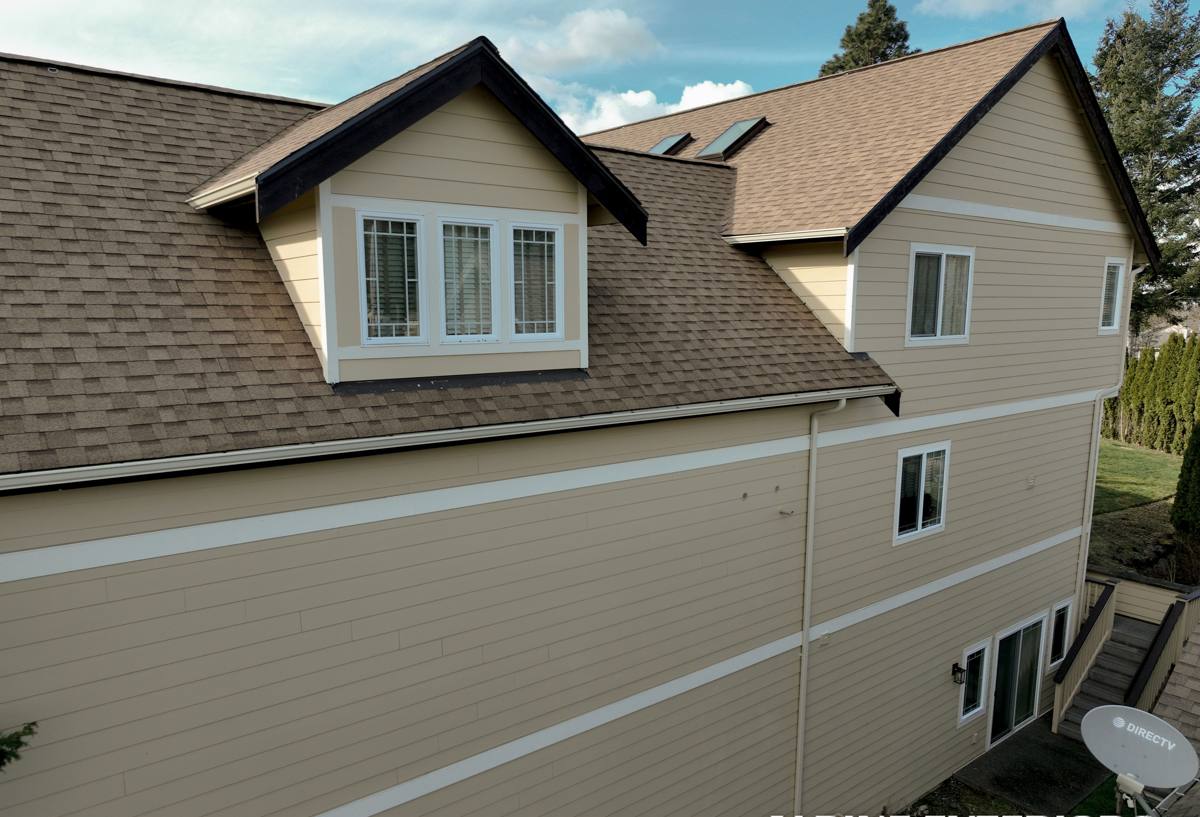
Signs Your Windows Are Losing the Fight
Most homeowners don't replace windows because they woke up wanting new windows — they replace them because the old ones started causing problems. Here's what we typically hear about when we get called out to a home in Sumas:
- Condensation or fogging trapped between the panes of a double-pane window (a sign the seal has failed)
- Visible moss, algae, or dark streaking building up on the frame or sill
- Drafts or cold spots near the window, especially during outflow wind events
- Wood frames that feel soft, spongy, or show paint bubbling near the corners
- Windows that are difficult to open, close, or lock properly
- A noticeable jump in heating costs without any other explanation
- Visible gaps or daylight around the frame when the window is closed
Any one of these on its own might just mean a repair. Several at once, or a window over 20 years old, usually means it's time to talk about replacement.
What a Correct Custom Window Installation Actually Involves
It starts with the opening, not the window
A lot of window problems trace back to what happened at the rough opening, not the window itself. Before anything gets installed, the opening needs to be checked for square, for rot or water damage in the surrounding framing, and for proper flashing that will actually shed water downward and outward instead of trapping it against the wall assembly. Skipping this step is the single most common reason a "new" window starts failing within a few years.
Flashing and moisture management
In a climate that sees as much driving rain as Whatcom County does, the flashing detail around a window matters as much as the window itself. Correct installation means integrating the window's nailing flange with the home's weather-resistive barrier in the right shingle-lap order — house wrap over the top flashing, never under it — so water is directed out and away from the wall cavity rather than behind the siding.
Sealing and insulation, done right
Gaps around the frame need to be filled with a low-expansion foam or backer rod and sealant designed for window installation, not construction-grade spray foam that can bow the frame and cause the sash to bind. Too little insulation leaves drafts; too much or the wrong product creates its own problems.
Matching the home
Sumas has a mix of older homes near town and newer construction on the outskirts. Older homes often have non-standard rough openings, different trim profiles, and sometimes original wood windows that were built to dimensions modern manufacturers don't stock. Custom windows are measured and, where needed, built or modified to fit the actual opening rather than forcing the opening to fit a standard size.
Choosing a Frame Material for This Climate
Frame material has more to do with how a window performs in Whatcom County weather than almost any other decision. Here's how the common options compare for a location like Sumas:
| Frame Material | Moisture Resistance | Maintenance | Best Fit |
|---|---|---|---|
| Vinyl | Good — won't rot, minimal upkeep | Low; occasional cleaning | Most homes, especially where budget and low maintenance matter |
| Fiberglass | Excellent — very stable in temperature swings and moisture | Low | Homes exposed to strong wind or wide temperature swings, longer-term investment |
| Wood | Requires diligent upkeep to resist rot in a wet climate | High; regular painting/sealing | Historic or period-accurate homes where original wood is being preserved or matched |
| Wood-clad (wood interior, metal or vinyl exterior) | Good — exterior shell protects the wood | Moderate | Homeowners who want a wood interior look with better exterior durability |
| Aluminum | Fair — can conduct cold and contribute to condensation without a thermal break | Low | Specific architectural applications; less common for residential in this climate |
We'll walk through these trade-offs honestly during your estimate. There's no single "best" material — there's the right material for your home, your budget, and how much upkeep you actually want to take on.
Glass and Energy Performance
Beyond the frame, the glass package matters just as much. In a climate with cool, wet winters and moderate summers, you're generally looking for a low U-factor (how well the window resists heat loss) and a moderate solar heat gain coefficient (SHGC) — enough to let in useful winter light without overheating rooms with south or west exposure in summer. Double-pane windows with a low-E coating and argon gas fill are the standard baseline for this region; triple-pane adds further insulation value and is worth discussing for north-facing rooms, homes near the windier parts of town, or anyone prioritizing long-term energy savings over upfront cost.
How Our Process Works
- On-site assessment. We look at your existing windows, the condition of the openings, and how your home is exposed to wind, rain, and sun.
- Measuring and product selection. Every opening gets measured individually. We walk you through frame material, glass package, and style options based on what we see on-site — not a generic recommendation.
- Written estimate. You get a clear breakdown of what's included before any work is scheduled.
- Installation. Proper removal of the old window, inspection and repair of any rot or framing issues found underneath, correct flashing and sealing, and careful reinstallation of trim.
- Final walkthrough. We check operation, sealing, and cleanup with you before we consider the job done.
What Affects the Cost
Custom window pricing depends on more than just the size of the opening. The table below covers the main factors that move the price up or down:
| Factor | Why It Matters |
|---|---|
| Frame material | Fiberglass and wood-clad typically cost more upfront than vinyl but can offer better long-term durability |
| Glass package | Triple-pane and specialty low-E coatings add cost but improve energy performance |
| Opening condition | Rot or framing repair discovered during removal adds labor and material |
| Non-standard sizing | Custom-built sizes for older or unusual openings cost more than off-the-shelf sizes |
| Number of windows | Doing a full-home replacement at once is usually more cost-efficient per window than one-off replacements |
| Accessibility | Second-story or hard-to-reach windows take more time and equipment |
We'd rather give you an honest range during an in-person estimate than a number over the phone that doesn't hold up once we see the actual openings.
Why Hiring a Crew That Already Works in Sumas Matters
A window installer who mostly works elsewhere in Whatcom County or beyond doesn't necessarily know how this specific area behaves. Crews familiar with Sumas know what the gap winds do to a poorly sealed installation, how the humidity here affects wood versus vinyl over time, and what the older housing stock near town tends to look like underneath the trim. That local pattern recognition is what keeps a job from turning into a surprise once the old window comes out.
There's also a practical side: a crew based nearby can get to your home quickly for the estimate, the install, and — if something ever needs a warranty check or adjustment — the follow-up. That matters more in a smaller community where you're not just another stop on a route.
Ready to Talk About Your Windows?
If your windows in Sumas are drafty, fogged, hard to operate, or just overdue, we're happy to come take a look. There's no pressure and no obligation — just a straight assessment of what your home needs and what your options actually cost. Fill out the form below to schedule a free estimate.