 Blaine Exterior
 Building Decks for Cherry Point's Marine Climate
Cherry Point sits out at the edge of Whatcom County, close enough to the water that salt air is part of daily life, not an occasional thing. A deck built here has to deal with conditions that a deck twenty miles inland never sees: near-constant moisture, driving rain off the Strait, and a moss season that can run from October well into spring. We've built and repaired decks in this stretch of the county long enough to know which materials, fasteners, and framing details hold up out here and which ones fail early no matter what the sales brochure claims.
This page is specifically about custom decks for Cherry Point properties — not a general decking overview. If you're comparing materials, planning a rebuild, or just trying to understand why your last deck didn't last, the details below are what actually matter for this location.
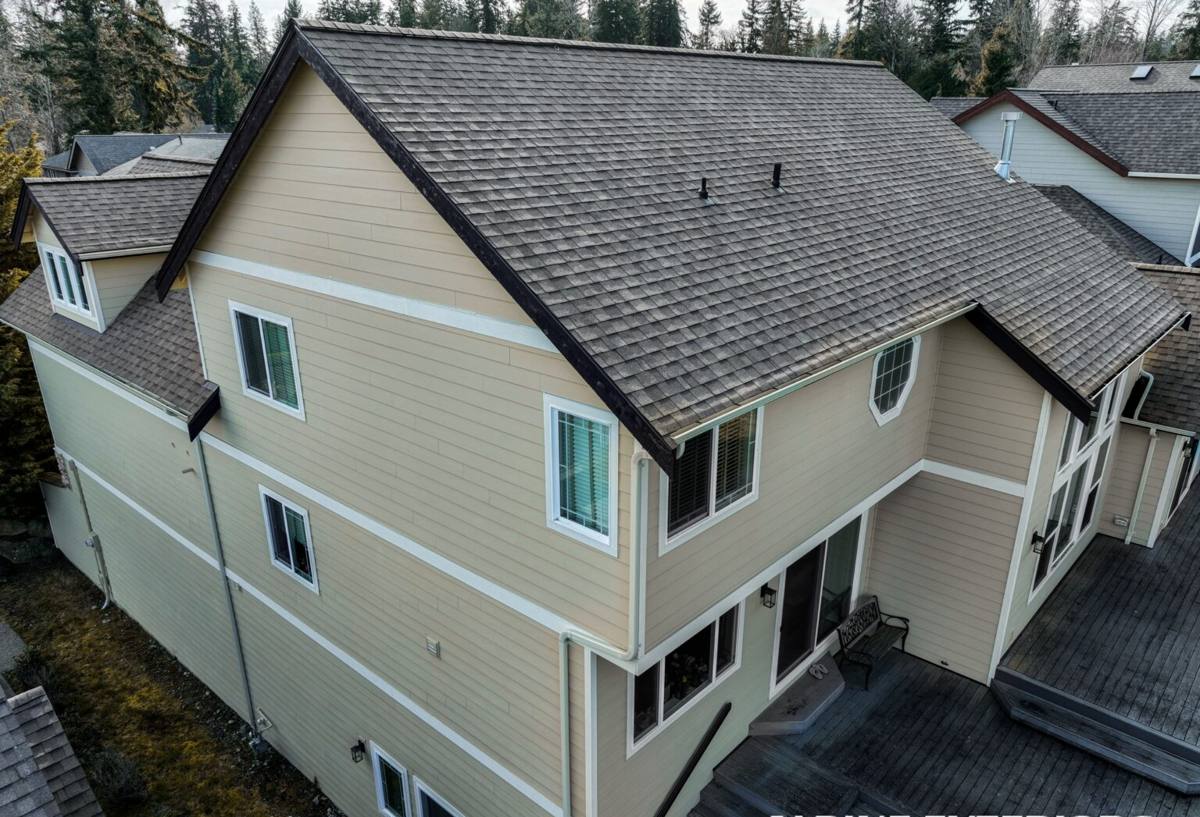
What Salt Air and Moss Actually Do to a Deck
Salt-laden air accelerates corrosion on anything metal — fasteners, brackets, railing hardware, even the heads of exposed screws. In a typical inland yard, a galvanized deck screw might last the life of the deck. Out here, lower-grade coatings can start showing rust bleed within a few seasons, which stains the decking around every fastener and weakens the connection over time.
Moss and algae are a separate but related problem. Western Washington's wet, mild winters are ideal moss-growing conditions, and a deck that stays shaded or doesn't drain well becomes a moss farm. Beyond looking bad, moss holds moisture against the decking surface, which is exactly what accelerates rot in wood and can dull or degrade the wear layer on some composite products if it's left to sit. On sloped or waterfront lots near Cherry Point, we also see wind-driven rain hit decks at angles that a standard roof overhang doesn't shield, so water intrusion at ledger boards and stair connections is a bigger concern here than it would be on a fully sheltered inland lot.
Choosing the Right Decking Material for This Site
There's no single "best" decking material — the right choice depends on your budget, how much upkeep you're willing to do, and how exposed your specific lot is to wind and salt. Here's how the common options actually compare for a Cherry Point property:
| Material | Salt/Moisture Behavior | Maintenance | Typical Lifespan Here |
|---|---|---|---|
| Pressure-treated pine/fir | Absorbs moisture readily; needs sealing to resist swelling and splitting | Annual cleaning, re-sealing every 1-2 years | 10-15 years with upkeep |
| Cedar | Naturally rot- and insect-resistant, but surface grays and can cup if not maintained | Cleaning plus periodic oil or stain | 15-20 years with upkeep |
| Capped composite | Doesn't absorb water or rot; resists staining from moss runoff | Periodic washing; no sealing or staining | 25+ years, manufacturer-dependent |
| PVC decking | Fully moisture-immune; won't swell, splinter, or hold mold in the board itself | Low — occasional washing | 25+ years, manufacturer-dependent |
We'll talk through these trade-offs honestly during a site visit rather than pushing whichever product has the best margin. A lot of Cherry Point homeowners land on capped composite or PVC for the decking surface specifically because they don't want to be re-sealing a deck every year in a climate that barely gives the wood time to dry between rain events. Others prefer the look and feel of real wood and are fine with the maintenance trade-off — that's a legitimate choice too, as long as it's made with eyes open.
A Note on Uncapped Composite
Older, uncapped composite boards (wood-plastic blends without a protective outer shell) don't handle this climate well. Without a cap layer, they can absorb moisture at the surface and are more prone to mold and mildew staining in a moss-heavy environment. That's a maintenance and warranty-structure issue, not a knock on any specific brand — it's simply why we steer clients toward capped or fully synthetic products for decking surfaces out here.
Framing and Structure: What's Underneath Matters More Than the Decking
Homeowners often focus on the surface material and overlook the frame, but the frame is what fails first in a marine climate if it's built wrong. A few things we treat as non-negotiable on every Cherry Point deck:
- Ledger board flashing installed correctly against the house, not just caulked — caulk alone fails under sustained wind-driven rain
- Joists and beams either naturally durable, pressure-treated for ground or moisture contact, or protected with a joist tape/flashing system to keep water out of fastener holes
- Proper airflow and drainage underneath the deck so moisture doesn't pool and sit against the framing
- Post bases set to keep wood posts off wet grade and out of standing water
- Beam and joist spans engineered for our snow and live-load requirements, not just minimum code
A deck can have premium decking boards on top and still fail in ten years if the framing underneath wasn't built for this level of moisture exposure. We build the structure to outlast the surface material, not the other way around.
Fasteners, Flashing, and Hardware
This is the detail that gets skipped most often, and it's the one that shows up first as a problem. In a salt-air environment we specify:
- Stainless steel or high-grade coated fasteners rated for the specific decking material, not generic exterior screws
- Hot-dip galvanized or stainless structural hardware — joist hangers, post bases, and hurricane ties — rather than standard mill-galvanized
- Corrosion-resistant flashing at every point where wood meets metal or where water can collect
- Isolation between dissimilar metals where needed, since certain metal combinations accelerate corrosion when wet
The cost difference between standard and marine-grade hardware on a typical deck is modest relative to the total project cost. The difference in how the deck ages is not modest at all — it's often the single biggest factor in whether a deck needs hardware repairs at year eight or year twenty-five.
Railings, Stairs, and Code Requirements
Railings and stairs carry their own set of considerations beyond looks. Whatcom County follows Washington State building code requirements for guardrail height, baluster spacing, and stair geometry, and any elevated deck will need a permit and inspection. We handle that process as part of the build so you're not left chasing paperwork after the fact.
On exposed or elevated Cherry Point lots, we also pay attention to wind load on railing systems — cable rail and glass panel systems look great but behave differently under wind pressure than traditional baluster railing, and that affects post spacing and structural backing. We'll flag this during design if it applies to your site rather than after the railing's already up.
Our Process, Start to Finish
A custom deck project runs through the same core stages regardless of size, though the details shift based on your lot and goals:
- Site visit to assess grade, drainage, sun/shade exposure, and wind exposure specific to your property
- Design conversation covering layout, material selection, and railing style, with honest trade-offs explained
- Permit drawings and submission to Whatcom County where required
- Demo of any existing structure and site prep
- Framing, with all structural connections built to the corrosion-resistant standard described above
- Decking, railing, and stair installation
- Final walkthrough and inspection sign-off
We keep you informed at each stage rather than disappearing until the job's done — you should know what's happening on your property and why.
Maintenance: What Actually Keeps a Cherry Point Deck Looking Good
No decking material is entirely maintenance-free in this climate, but the workload varies a lot by material choice. A realistic maintenance rhythm for this area looks like:
- Sweep debris and leaves regularly during fall so moisture and organic matter don't sit on the surface
- Wash the deck surface at least once or twice a year to remove early moss and algae growth before it establishes
- Check and clear gaps between boards so water drains through instead of pooling
- For wood decks, inspect the seal/stain annually and reapply before the surface starts absorbing water again
- Have hardware and framing connections checked periodically, especially on decks over ten years old
Staying ahead of moss is far easier than removing an established colony, which can stain and etch some surfaces if left too long.
Why a Crew That Already Works Cherry Point Matters
Building codes, permitting, and material specs for a marine-exposed Whatcom County lot are different from a generic decking job. A crew that hasn't worked this specific stretch of coastline may not think to spec marine-grade hardware, may under-detail the flashing, or may not account for the wind exposure that waterfront and near-waterfront Cherry Point lots see. We've built and repaired decks in this area long enough to know which shortcuts show up as problems in five years instead of twenty, and we build to avoid them from the start.
If you're planning a new deck or replacing one that didn't hold up to this climate, we're happy to walk your property and give you a straightforward, no-pressure estimate — just fill out the form below.