 Blaine Exterior
 The Climate California Creek Siding Has to Survive
Homes in the California Creek area of Blaine sit right at the edge of where Whatcom County's marine climate does its worst work on a building envelope. You've got salt-laden air coming off the water, wind-driven rain that hits siding sideways instead of straight down, and a moss season that can stretch from October through May in a wet year. None of these things alone would wreck a wall system. Together, over ten or fifteen years, they find every weak point in a siding installation and turn it into a repair bill.
Salt air is corrosive to fasteners and trim metal, and it accelerates the breakdown of paint films faster than the same product would fail further inland. Driving rain doesn't just wet the surface of your siding — it tests the flashing, the caulk joints, and the water-resistive barrier behind the cladding, because wind pressure pushes water into laps and seams that would stay dry in a calmer climate. And moss, once established on a north-facing wall or a shaded eave, holds moisture against the siding surface for months at a time, which is exactly the condition that rots wood-based products and stains anything with a weak factory finish.
We bring this up first because it changes what "good siding" means here. A product or installation detail that performs fine in a dry inland climate can underperform in this one. Anyone quoting a California Creek siding replacement without accounting for wind-driven moisture and prolonged damp exposure is quoting the wrong job.
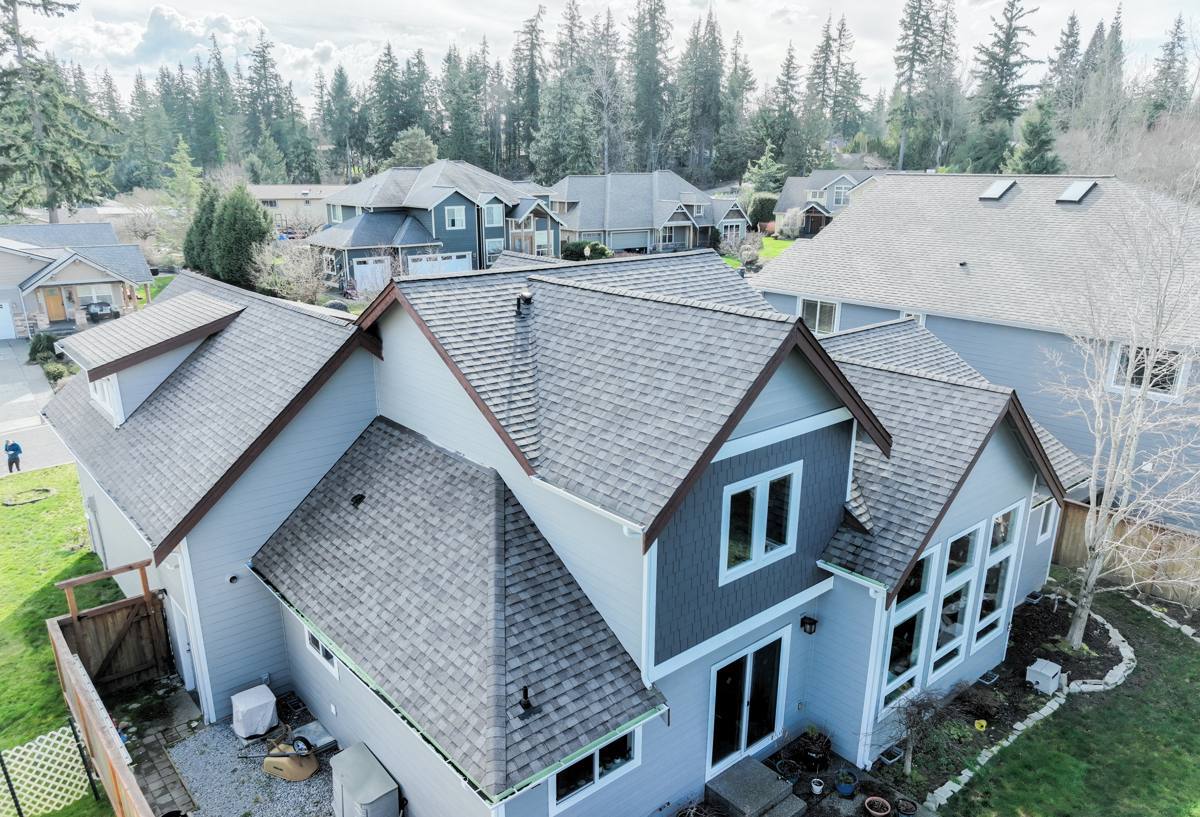
Signs a California Creek Home Needs Replacement, Not Repair
Siding failure in this climate is usually gradual, and homeowners often patch symptoms for years before addressing the underlying problem. Here's how to tell which stage you're actually in.
- Soft or spongy spots when you press on siding, especially near the bottom courses, around window trim, or at butt joints — this usually means moisture has already gotten behind the material.
- Persistent moss or algae growth that returns within weeks of cleaning, particularly on shaded or north-facing walls — a sign the surface is staying damp longer than the product can tolerate.
- Paint that's chalking, peeling, or blistering in patches rather than evenly across the wall, which points to moisture pressure pushing out from behind the siding rather than simple sun fade.
- Visible cupping, buckling, or delamination in lap siding, especially on older wood or composite products that have taken on repeated wet-dry cycles.
- Warm, musty smells or visible staining on interior walls that back up to exterior siding — this usually means the problem has moved past the cladding and into the wall assembly.
If you're seeing one or two of these in isolated spots, targeted repair may still make sense. If you're seeing several of these across multiple walls, or if the siding is original to a home built more than 20 years ago, full replacement is usually the more honest recommendation — patching a wall system that's failing broadly just delays a bigger repair later, at a higher cost.
What a Correct Siding Replacement Actually Involves
Siding replacement isn't just pulling off old boards and nailing up new ones. Done correctly, especially in a climate like this one, it's a system — and each layer matters as much as the visible siding itself.
The parts nobody sees after the job is done
Once the old siding is off, the sheathing underneath gets inspected for rot or soft spots before anything new goes on — this is the point where hidden moisture damage from years of a failing wall system gets caught and fixed, not covered up. A new weather-resistive barrier goes over the sheathing, lapped correctly so water sheds downward and outward rather than working its way behind seams. Flashing at windows, doors, and any wall penetration gets integrated with that barrier in the correct shingle-lap order, because flashing installed out of sequence is one of the most common causes of hidden rot in coastal homes.
The parts everyone sees
The visible siding installation — fastener placement, joint spacing, caulk selection, and factory-finish integrity — determines how the wall performs and looks for the next several decades. In a high-moisture, high-salt environment, fastener corrosion resistance and joint detailing matter more than they would in a drier climate, because the margin for error is smaller.
| Wall System Component | Why It Matters Here |
|---|---|
| Water-resistive barrier | Manages the moisture that gets past the cladding during wind-driven rain |
| Flashing at penetrations | Prevents water intrusion at windows, doors, and trim — the most common failure point |
| Fastener material | Corrosion resistance matters more with salt air exposure |
| Factory finish quality | Determines how well the siding resists moss, staining, and fade over time |
| Joint and caulk detailing | Keeps butt joints and trim seams sealed through repeated wet-dry cycles |
Why We Install Only James Hardie Fiber Cement
We made a deliberate decision to install James Hardie fiber cement siding exclusively, and we don't install vinyl, LP SmartSide, or primed wood products like cedar or spruce. That's not a marketing position — it's a response to what we consistently see fail, and hold up, in this exact climate.
Fiber cement is non-combustible, which matters increasingly in this region, and it doesn't feed moss growth or absorb water the way wood-based or engineered-wood products can. James Hardie's ColorPlus factory finish is baked on and warranted against fade and peeling for a period well beyond what field-applied paint typically holds up under salt air exposure. Hardie also engineers specific product lines for different climate zones (their HZ5 line, for example, is built for wetter, colder regions like ours), which means the product arriving on a California Creek job site was designed with this kind of weather in mind, not adapted from a product built for a drier market.
None of this means other products are without merit — vinyl is inexpensive and low-maintenance in mild climates, and engineered wood has a lower material cost up front. But given what driving rain and a long moss season do to a wall system over 15-20 years, we'd rather stand behind one product we trust completely than offer a menu of options with different long-term risk profiles. That's the whole reason our estimates only include Hardie.
Our Replacement Process for California Creek Homes
- On-site assessment. We walk the exterior, check for soft sheathing, moss patterns, and drainage issues specific to the lot — homes closer to low-lying or shaded areas near California Creek often need different moisture management than a sun-exposed lot a few blocks away.
- Written scope and estimate. You get a clear breakdown of what's being replaced, what Hardie product line and profile we're recommending, and why — no vague allowances.
- Tear-off and sheathing inspection. Old siding comes off in sections so we can catch and address any hidden rot before it's covered by new material.
- Barrier and flashing installation. Weather-resistive barrier and flashing go in correctly lapped and sequenced — this is the step that determines how the wall performs in wind-driven rain for the next few decades.
- Hardie siding installation to manufacturer spec. Correct fastener spacing, joint treatment, and clearances (grade, roofline, and trim) so the warranty stays intact and the finish performs as engineered.
- Final walkthrough. We go over the finished job with you directly before calling it complete.
Cost Factors for a California Creek Siding Replacement
Every home is different, so we won't quote a number without seeing the house — but these are the variables that actually move the price on a project like this.
| Factor | Why It Affects Cost |
|---|---|
| Extent of hidden sheathing damage | Rot found during tear-off adds material and labor to repair before new siding goes on |
| Home size and wall complexity | More corners, gables, and trim details mean more labor time and material cuts |
| Siding profile and accessories | Lap width, trim style, and soffit/fascia work all factor into material cost |
| Access and site conditions | Tight lots, slopes, or limited staging space can add labor time |
| Existing moisture or moss damage | Homes with long-neglected moss growth sometimes need more extensive sheathing repair |
The one thing we won't do is cut corners on the hidden layers — barrier, flashing, fastener quality — to hit a lower number. Those are the parts that determine whether the job still looks good in year twelve.
Choosing a Crew That Knows This Area
Siding installation quality varies a lot between crews, and a lot of that difference doesn't show up until years after the job is finished. A few things worth asking any contractor bidding a California Creek siding replacement:
- Do they install to the manufacturer's published installation instructions, or their own shortcut version?
- Will they inspect and address sheathing damage they find during tear-off, rather than covering it up?
- Do they carry manufacturer certification for the specific product they're installing?
- Can they explain, specifically, how their flashing and barrier detailing accounts for wind-driven rain?
- Do they offer one product they stand behind, or a menu of options with no clear recommendation?
A crew that's worked this specific stretch of Whatcom County has already seen how moss establishes on shaded walls here, how salt air treats exposed fasteners, and where wind-driven rain tends to find its way into a wall system. That local pattern recognition is hard to substitute with generic experience from a drier region.
Living With Hardie Siding Through Moss Season
Correct installation gets you most of the way to a low-maintenance exterior, but a little seasonal upkeep still matters here. An annual rinse of shaded and north-facing walls before moss season sets in keeps organic growth from establishing in the first place — it's far easier to prevent than remove. Keep gutters clear so overflow isn't running down the siding face, and trim back vegetation that's holding moisture against a wall. None of this is heavy maintenance, but skipping it in a climate this wet shortens the life of even a well-installed system.
If your California Creek home is due for new siding, or you're not sure whether what you're seeing is a repair issue or a replacement issue, we're happy to take a look. We offer free, no-pressure estimates — just fill out the form below and we'll get in touch.