 Blaine Exterior
 California Creek's Coastal Climate Is Hard on Siding
California Creek sits in one of the wettest, saltiest corners of Whatcom County. Homes here take on moisture from three directions at once: driving rain blowing in off the water, near-constant humidity, and a salt-laden air that settles on every exterior surface within a few miles of the coast. Add in a moss season that can stretch from late fall through spring, and you have a set of conditions that will find every weak point in a home's exterior within a few years, not a few decades.
Siding in this part of Blaine isn't just a cosmetic layer. It's the first line of defense against water intrusion, and it's constantly being tested by wind-driven rain hitting walls at an angle, not just falling straight down. That matters more than most homeowners realize, because a lot of siding products and installation shortcuts that hold up fine in drier inland climates start failing here — sometimes within a single wet season.
What Happens When the Wrong Siding Goes Up Here
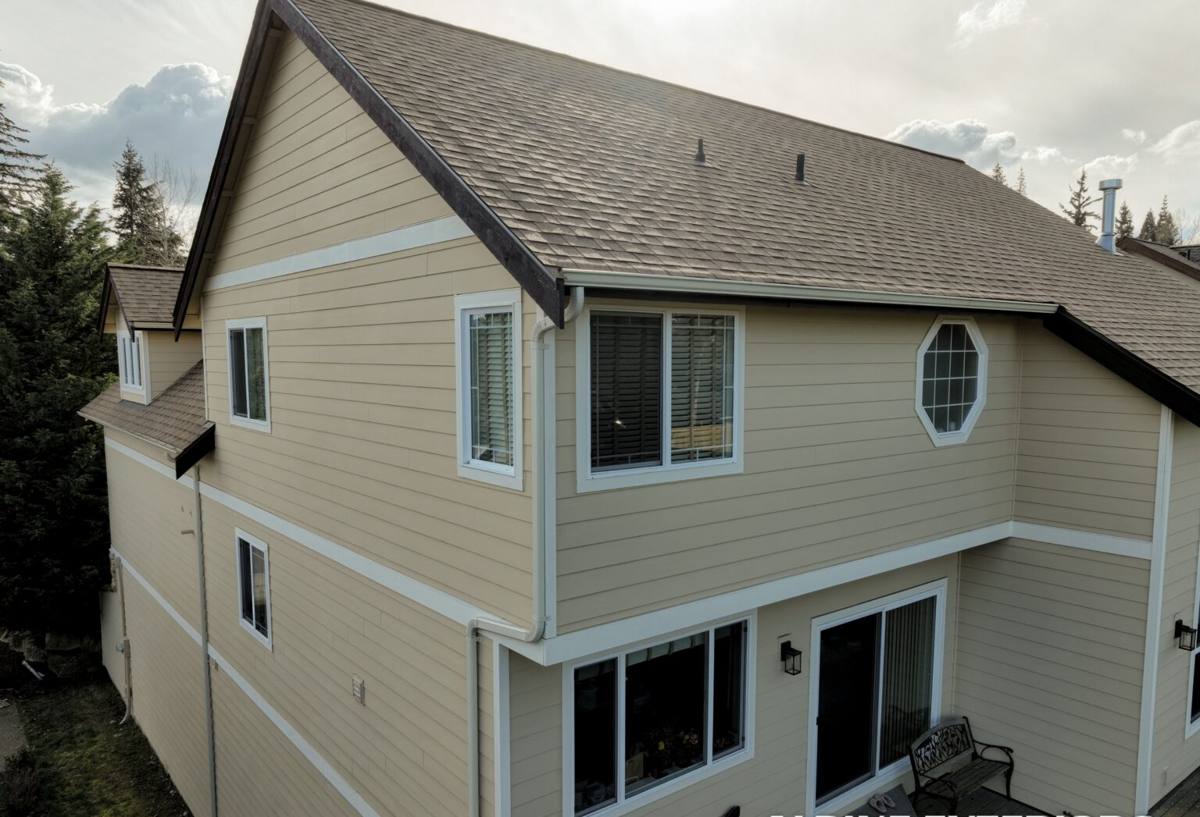
We see the same patterns over and over on homes in this area: caulk joints that have opened up and let water behind the siding, panels that have swelled or delaminated at the edges, paint that's chalking and peeling years ahead of schedule, and moss and algae staining that keeps coming back no matter how often it's cleaned off. None of that is really about a homeowner failing to maintain their house — it's about products and installation methods that weren't built for this specific combination of salt, moisture, and cool, shaded, damp conditions.
This is exactly why we standardized on James Hardie fiber cement siding and don't install vinyl, engineered wood siding, or unfinished cedar. Those products all have real strengths in the right setting. But on a coastal Whatcom County property with heavy rain exposure and a long moss season, their weak points — moisture sensitivity, coating longevity, or ongoing upkeep demands — show up faster and cost more to deal with than most homeowners expect when they first choose a product.
Why James Hardie Fits This Climate
The HZ5 Product Line
James Hardie engineers its siding by climate zone, and the Pacific Northwest falls under the HZ5 line, built specifically to perform in wet, marine-influenced conditions. That means the product is formulated for the freeze-thaw cycles, sustained moisture, and driving rain that are routine in this part of Washington rather than treated as an occasional stress test.
Fiber cement itself is a mix of cement, sand, and cellulose fibers, which makes it dimensionally stable — it doesn't swell, warp, or rot the way wood-based products can when they take on moisture. That's a significant advantage in a neighborhood where siding is regularly wetted by rain and stays damp longer because of shade, tree cover, or simple proximity to the water.
ColorPlus Factory Finish
James Hardie's ColorPlus finish is baked on in a controlled factory setting rather than sprayed or brushed on site, and it's backed by its own finish warranty separate from the product warranty. In a salt-air environment, that matters because factory-cured finishes generally resist fading, chipping, and chalking far better than field-applied paint, which has to cure in whatever weather shows up that week — not ideal in a place where a dry, calm painting day can be hard to come by.
Fiber cement is also non-combustible, which is a real consideration anywhere in Western Washington given how wildfire risk has crept into conversations that used to be purely about rain and moisture. It's not the main reason homeowners in California Creek choose Hardie, but it's a genuine long-term benefit.
What Correct Installation Actually Involves
James Hardie siding performs the way it's designed to only when it's installed to the manufacturer's specifications. A lot of the moisture problems we get called out to inspect on other companies' work trace back to installation shortcuts, not the product itself.
Clearances and Flashing
Correct installation means maintaining proper clearance between the bottom edge of the siding and the ground, deck surfaces, and roof lines — typically several inches — so water doesn't wick up into the material or pool against it. It also means flashing every window, door, and penetration correctly, with materials and laps sequenced so water is always directed outward and downward, never trapped behind the cladding.
Fastening and Joints
Fasteners have to be set at the right depth and spacing, into solid framing, using the correct nail or screw type for the substrate. Butt joints at the ends of boards need to be treated correctly — either sealed per Hardie's specification or, on many of our jobs, run behind trim or with a rain-screen approach that reduces reliance on caulk altogether, since caulk is often the first thing to fail in this climate. A weather-resistant barrier goes behind the siding as a backup layer, not as a substitute for correct flashing and fastening.
None of this is exotic work, but it's detail-dependent, and it's exactly the kind of work that gets rushed on jobs where the crew is unfamiliar with coastal installation demands.
Comparing Siding Options for California Creek Homes
| Factor | James Hardie Fiber Cement | Vinyl | Engineered Wood | Cedar |
|---|---|---|---|---|
| Moisture behavior in coastal rain | Dimensionally stable, doesn't swell or rot | Doesn't absorb water, but can warp and gap over time | Vulnerable at cut edges and joints if moisture gets in | Absorbs moisture; needs consistent sealing to resist rot |
| Finish longevity in salt air | Factory-cured ColorPlus finish, separately warrantied | Color molded in but can fade and become brittle with UV/salt exposure | Factory or field-applied coating, variable performance | Requires refinishing on a recurring cycle |
| Moss and algae resistance | Cleanable, holds finish well between cleanings | Cleanable but can stain in seams and laps | More porous surface can hold moss and staining | Porous surface, prone to moss and graying |
| Fire resistance | Non-combustible | Combustible | Combustible | Combustible |
| Ongoing upkeep | Periodic washing, repainting only if desired years later | Low structural upkeep, but color/finish issues aren't repairable | Regular inspection and recoating needed | Regular sealing, staining, or painting needed |
Every product on that list can be installed correctly and can perform for years. Our decision to only install James Hardie comes down to which product gives Whatcom County homeowners the best combination of moisture performance, finish durability, and low long-term maintenance for what this specific coastline throws at a house.
Our Process for California Creek Projects
We approach every siding project in this area the same structured way:
- On-site assessment — we look at existing siding, trim, flashing, and any signs of moisture intrusion before recommending a scope of work.
- Product and color selection — we walk through Hardie's plank, shingle, and panel options along with ColorPlus color choices suited to the home and its exposure.
- Prep and moisture check — sheathing gets inspected once old siding is off, and any rot or hidden damage gets addressed before new material goes up, not covered over.
- Weather barrier and flashing installation — this is the step that determines how the house performs in wind-driven rain for the next several decades, so it doesn't get rushed.
- Siding installation to Hardie's specification — correct clearances, fastening, and joint treatment throughout.
- Final walkthrough — we go over the finished work and warranty coverage with the homeowner before we consider the job done.
Living With Hardie Siding in This Climate
Fiber cement is low-maintenance, not no-maintenance. In California Creek's environment, we recommend an annual rinse-down to clear salt film, pollen, and organic buildup before it has a chance to feed moss growth, especially on north-facing walls and areas shaded by trees. A garden hose and soft brush handle most of it — pressure washers should be used carefully, if at all, so water isn't forced behind trim or into joints.
Keep gutters clear and downspouts directed away from the foundation so runoff isn't sheeting down siding or pooling near the base of the wall. Trim back vegetation that keeps siding shaded and damp — that single habit does more to control moss than any cleaning product.
What to Expect and Ask When Hiring
- Ask whether the crew installing your siding is factory-trained or certified on James Hardie products specifically, not just experienced with siding in general.
- Ask how they handle flashing at windows, doors, and roof intersections — a vague answer here is a red flag.
- Ask what weather-resistant barrier they use behind the siding and how it's integrated with flashing.
- Ask about clearance from grade, decks, and roof lines, and why those measurements matter in a wet climate.
- Ask what's covered under the manufacturer's product and finish warranties, and whether the warranty is transferable if you sell the home.
- Get a written scope that specifies the Hardie product line, profile, and color — not just "fiber cement siding" as a line item.
Why a Crew That Already Works California Creek Matters
Coastal Whatcom County installation isn't identical to siding work twenty miles inland. Crews who work this area regularly already understand how far driving rain travels up a wall, which sides of a house need the most conservative flashing detail, and how much clearance actually holds up once moss season sets in for months at a stretch. That familiarity shows up in fewer callbacks and fewer surprises — not because the work is more complicated, but because the margin for error in this climate is smaller than it looks.
If you're weighing a siding replacement or repair on a California Creek property, we're happy to take a look and talk through what your home specifically needs. Reach out for a free, no-pressure estimate — there's no obligation, and it's the fastest way to get a straight answer about your siding.