 Blaine Exterior
 Decking Built for Blaine Harbor's Waterfront Conditions
Blaine Harbor sits right where Semiahmoo Bay meets the rest of Whatcom County's marine weather pattern, and that location changes what a deck has to survive. Homes here deal with salt-laden air blowing off the water, long stretches of driving rain through fall and winter, and a moss season that can run eight months or more if a deck doesn't get enough sun or airflow. A deck built to a generic spec sheet — the kind sold at a big box store with installation instructions written for a dry Midwest suburb — will show its age fast in this environment. A deck built for Blaine Harbor specifically holds up.
This page is about composite decking done right for this particular stretch of Blaine: what the climate actually does to a deck over time, what a correct installation involves, and why the details matter more here than they would twenty miles inland.
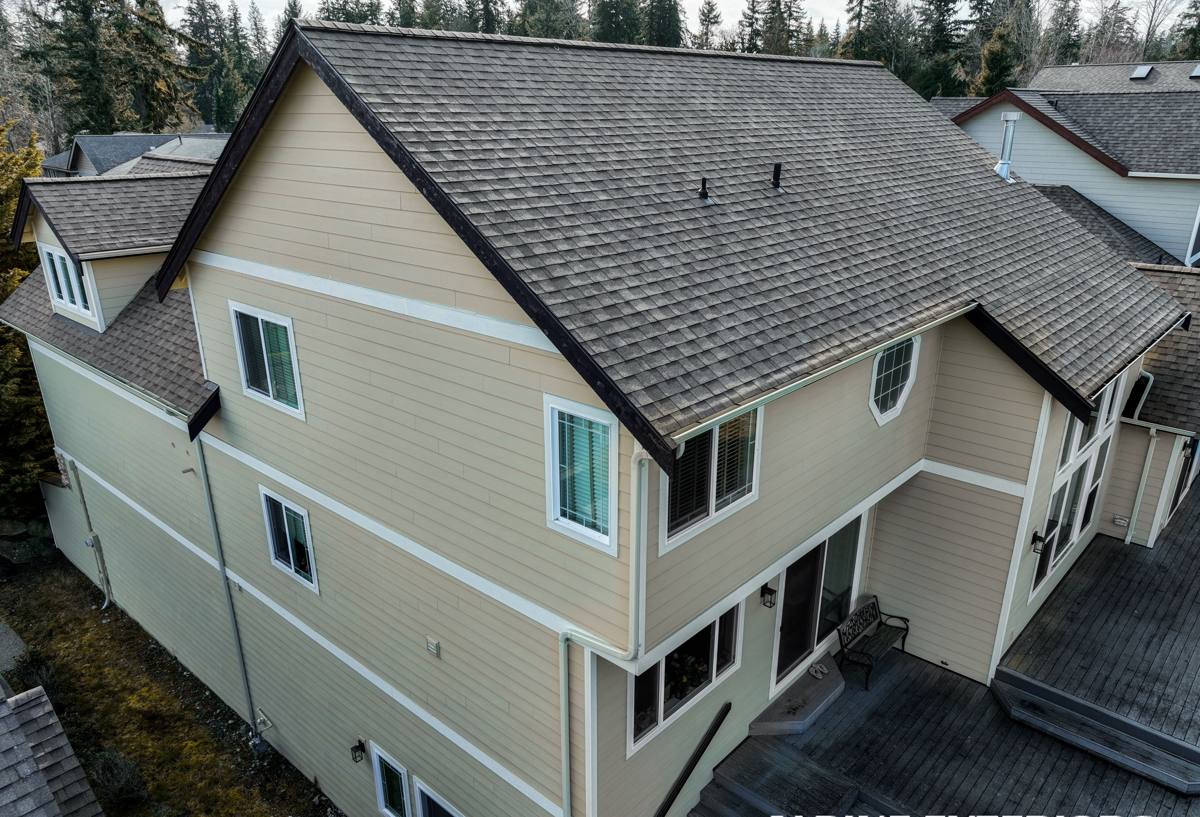
What Salt Air, Rain, and Moss Actually Do to a Deck
Salt Air
Salt in the air doesn't just affect boats and metal railings. It settles into every exposed surface on a deck, including the fasteners, flashing, and any exposed wood framing underneath. Over years, that salt exposure accelerates corrosion in anything that isn't rated for it — screws, joist hangers, structural brackets. It also has a way of finding gaps in coatings and sealants faster than plain rainwater would. A deck near Blaine Harbor needs hardware and fasteners chosen with that in mind, not standard interior-grade hardware.
Driving Rain
Whatcom County gets a lot of rain, but the driving, wind-pushed rain common near the water behaves differently than a straight-down shower. It gets pushed sideways into gaps, under boards, and against ledger connections at the house. If drainage and flashing aren't handled correctly, that water finds its way into the framing and stays there, since evaporation is slower in a cool, humid coastal climate than people expect.
Moss Season
Shaded, damp decks near the water grow moss and algae readily, especially on the north or water-facing side of a house where sun exposure is limited. Moss holds moisture against the deck surface long after the rain has stopped, which matters for wood decking but still matters for composite — moss buildup on any deck surface is slippery, unattractive, and eventually stains even durable materials if it's left to establish.
Why Composite Decking Fits This Environment
Composite decking — a blend of wood fibers and recycled plastic, usually with a protective outer cap — was developed largely to solve the problems that wood decking runs into in wet, coastal climates: rot, splintering, warping, and the endless cycle of sanding and refinishing. For a Blaine Harbor home, the appeal is straightforward:
- It doesn't absorb water the way solid wood does, so it doesn't swell, cup, or rot from prolonged dampness
- It doesn't need annual staining or sealing to keep water out
- Capped composite boards resist moss and algae staining better than bare wood, and clean up more easily
- It won't splinter underfoot, which matters for a deck that gets bare feet in summer and wet shoes the rest of the year
That said, composite isn't maintenance-free, and we tell every Blaine Harbor customer that up front. It still needs periodic cleaning to keep moss and grime from building up in the grain texture, and the substructure underneath still needs to be built correctly, because composite boards are only as good as what they're fastened to.
What a Correct Installation Involves
The Substructure Comes First
Most composite deck problems we get called out to fix in this area aren't failures of the decking material itself — they're failures in the framing underneath. Composite boards are heavier than wood and behave differently under load and temperature swings, so joist spacing, beam sizing, and ledger attachment all need to match the manufacturer's engineering specs for the specific board being used, not generic lumber-decking spacing.
Ledger Flashing and Water Management
Where a deck attaches to the house, correct flashing is the single most important detail on the entire project, especially with driving rain coming off the water. We flash the ledger board so water is directed away from the house band joist and rim, never trapped behind it. This is the detail that, done wrong, causes hidden rot years later that isn't visible from the deck surface at all.
Ventilation Underneath
Composite decking still needs airflow underneath the boards, and that matters more in a humid marine climate than a dry one. Proper joist spacing, gapping between boards, and clearance above grade let moisture evaporate instead of sitting trapped against the underside of the deck and the tops of the joists.
Fasteners and Hardware
Given the salt air exposure near Blaine Harbor, we use stainless steel or coated fasteners and hardware rated for corrosive environments, not standard galvanized hardware that's fine forty miles inland but starts rusting within a few seasons here. The hidden fastener systems used with most grooved composite boards also need to be matched correctly to the board profile — mismatched clips are a common cause of boards working loose over time.
Board Gapping and Expansion
Composite boards expand and contract with temperature, and correct gapping between boards and at end joints prevents buckling or unsightly gaps opening up later. This is a detail that's easy to get wrong when installers are used to solid wood, which doesn't move the same way.
Comparing Composite Decking Options
Not all composite decking is built the same, and the differences matter more in a coastal environment. Here's how the main categories generally compare for a Blaine Harbor installation:
| Type | Moisture Resistance | Moss/Algae Resistance | Maintenance | Typical Lifespan |
|---|---|---|---|---|
| Uncapped composite | Good | Fair — can stain over time | Occasional cleaning | 15-25 years |
| Capped composite (cap on top only) | Very good | Good | Light cleaning | 20-30 years |
| Fully capped composite (cap all sides) | Excellent | Very good | Minimal | 25-30+ years, often with longer warranties |
Fully capped boards cost more up front, but for a deck exposed to salt air and near-constant moisture, the added protection on the underside and edges — not just the walking surface — is often worth the difference. We'll walk through the real trade-offs for your specific deck location and sun exposure rather than defaulting to the most expensive option.
Our Process for a Blaine Harbor Deck
- On-site assessment: we look at sun exposure, wind exposure, existing drainage, and how close the deck sits to salt spray or standing moisture
- Framing plan: joist layout, beam sizing, and ledger connection engineered for the specific composite board and this site's conditions
- Demo and prep: removal of the old deck if applicable, inspection of the ledger and house framing for any hidden rot before building over it
- Framing and flashing: corrosion-resistant hardware throughout, correct ledger flashing, proper joist spacing and ventilation
- Decking installation: hidden fastener systems installed to spec, correct board gapping, attention to end-grain sealing at cuts
- Finish details: stair and railing integration, fascia boards, and a final walk-through with the homeowner
Living With a Composite Deck Near the Water
Composite decking cuts down maintenance dramatically compared to wood, but "low maintenance" isn't "no maintenance," especially this close to Blaine Harbor. A simple seasonal routine keeps a composite deck looking right for its full lifespan:
- Rinse or sweep the deck periodically to keep salt residue and organic debris from building up in the board texture
- Clean shaded or north-facing areas more often, since those are where moss and algae get a foothold first
- Keep planters, mats, and furniture feet from trapping moisture directly against the board surface
- Check railing posts and fastener points annually for any early signs of corrosion, even though the decking itself won't rot
- Trim back overhanging vegetation that keeps sections of the deck shaded and damp longer than the rest
Cost Factors to Expect
Every Blaine Harbor deck is different, but the same factors tend to drive the price whether it's a modest rebuild or a full waterfront-facing deck:
| Factor | Why It Matters |
|---|---|
| Board tier (uncapped vs. fully capped) | Higher-tier boards cost more per square foot but resist this climate's moisture and moss better long-term |
| Substructure condition | Rotted ledger boards, undersized framing, or corroded old hardware add repair work before decking can go down |
| Deck size and shape | Multiple levels, curves, or picture-frame border details add labor beyond a simple rectangular layout |
| Railing system | Composite, aluminum, or cable railing all price differently and hold up differently to salt air |
| Site access | Waterfront lots and tight side-yard access can add time for material staging and equipment |
We give honest, itemized estimates rather than a single flat number, so you can see exactly where the cost is going and where there's room to adjust the scope.
Why Hiring a Crew That Already Works Blaine Harbor Matters
A contractor who mostly builds decks in drier, inland parts of Whatcom County can still do competent framing work, but they may not default to corrosion-rated hardware, may under-spec ventilation for this level of humidity, or may not think to ask about sun exposure and moss risk before finalizing a board choice. None of that shows up as a problem on installation day — it shows up two or three winters later.
Working Blaine Harbor regularly means we've seen how decks in this specific setting actually age: where moss establishes first, which hardware holds up and which corrodes early, and how driving rain off the water finds its way into framing that wasn't flashed correctly the first time. That's the difference between a deck that needs attention in year three and one that's still solid in year twenty.
Get a Straightforward Estimate
If you're planning a new composite deck or replacing one that hasn't held up to Blaine Harbor's weather, we're happy to come take a look and walk you through what your specific site needs — no pressure, no upsell, just an honest assessment and a clear estimate. Use the form below to get started.