 Blaine Exterior
 Birch Point Sits Right at the Edge of the Weather
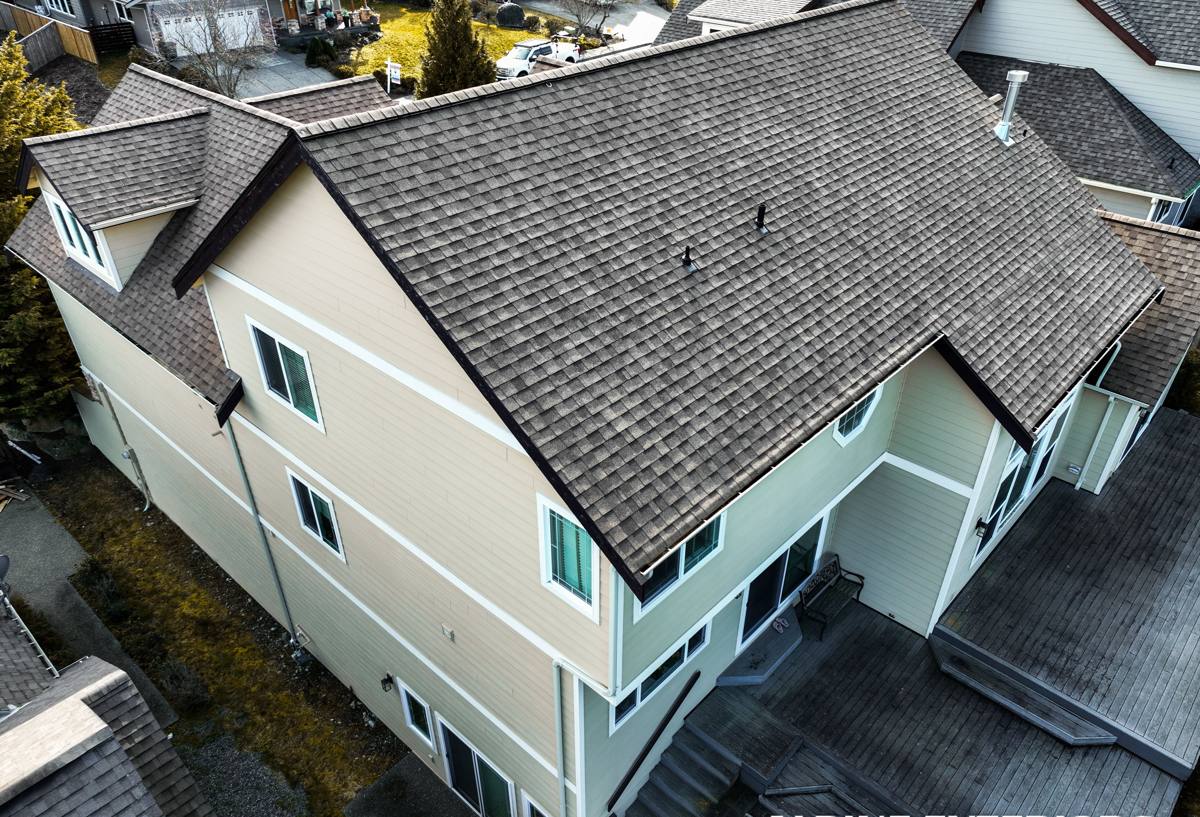
Birch Point is one of those Whatcom County spots where the house and the water are never far apart. That's part of the appeal — and it's also why siding here takes a beating that inland Blaine homes simply don't see. Salt-laden air moves off the water and settles on every exterior surface. Wind-driven rain hits siding sideways, not just from above, working its way into seams and laps that a calmer climate would never test. And for a good chunk of the year, shaded and north-facing walls stay damp long enough for moss and algae to take hold and spread.
None of that is unusual for this part of Washington. But it does mean that siding decisions made for a subdivision in a drier part of the state don't automatically hold up on a Birch Point lot. The material, the installation details, and the maintenance plan all need to account for what this specific stretch of coastline throws at a house year after year.
What Salt Air, Driving Rain, and Moss Actually Do to Siding
Salt Air
Airborne salt is corrosive to exposed metal fasteners, flashing, and trim, and it accelerates the breakdown of finishes that aren't built for coastal exposure. On siding materials with weaker factory finishes, salt exposure shows up as chalking, fading, and premature wear — especially on walls that face the water directly.
Driving Rain
Wind off the water doesn't just drop rain straight down — it pushes it laterally into siding seams, around window and door trim, and up under laps that were only designed to shed water falling vertically. Over time, any siding system with weak flashing details or unsealed penetrations will let moisture behind the cladding, and that's where real damage starts: rot in sheathing, mold, and framing decay that isn't visible until it's serious.
Moss and Algae
Shaded, north- and west-facing walls near tree lines or close to neighboring structures stay damp for extended stretches, especially through fall and winter. That moisture, combined with organic debris, gives moss and algae exactly what they need to take hold on siding surfaces and in trim joints. Beyond the cosmetic issue, sustained moss growth holds moisture against the siding surface, which shortens the life of any material that isn't inherently rot- and moisture-resistant.
Why We Install Only James Hardie Fiber Cement
We get asked fairly often why we don't offer vinyl, LP SmartSide, or the cheaper fiber cement alternatives. The honest answer is that we've made a standard for ourselves based on what actually performs in this climate, and we'd rather turn down a job than install something we don't believe will hold up on a Birch Point home.
| Material | Behavior in Salt Air & Driving Rain | Moss/Algae Resistance | Maintenance Burden |
|---|---|---|---|
| Vinyl siding | Can warp, fade, and become brittle with UV and temperature cycling; seams and laps are more vulnerable to wind-driven rain intrusion | Surface growth is common; panels can trap moisture behind them if not installed with proper ventilation | Low upfront, but replacement panels are often hard to color-match years later |
| LP SmartSide (engineered wood) | Wood-based core is vulnerable if moisture reaches cut edges or fastener penetrations; coastal moisture load raises the stakes on installation quality | Susceptible if surface coating wears or is damaged | Requires diligent caulk and paint maintenance to protect the wood substrate |
| Primed spruce / cedar | Natural wood movement plus high moisture exposure accelerates cupping, checking, and rot at end grain and joints | Organic material is a natural host for moss and mildew without frequent treatment | Highest — repainting, caulking, and spot repairs on a recurring cycle |
| James Hardie fiber cement | Non-combustible, dimensionally stable cement-based material; not vulnerable to rot; ColorPlus factory finish is engineered for UV and moisture exposure | Hard, inorganic surface doesn't feed organic growth the way wood-based products do; growth that does occur sits on the surface and cleans off | Occasional rinsing and inspection of caulk joints and fasteners |
Hardie isn't magic, and it isn't maintenance-free. But as a material, it starts from a much stronger baseline against the three things that do the most damage here: salt, wind-driven moisture, and sustained dampness. That baseline is why it's the only product we put our name on.
The Right Hardie System for a Birch Point Lot
James Hardie makes climate-specific product lines, and for Whatcom County's marine exposure, that means specifying the HZ5 formulation rather than a version engineered for a drier or less humid region. HZ5 is built with this kind of climate in mind — coastal Pacific Northwest conditions with high moisture exposure and a real freeze-thaw cycle in the shoulder seasons.
For most Birch Point homes we're working with a combination of:
- HardiePlank lap siding in a width and reveal that suits the home's style — the most common choice for full-wall coverage
- HardieTrim boards at corners, window and door surrounds, and fascia, matched to resist the same moisture exposure as the field siding
- HardiePanel where a vertical or board-and-batten look is called for, common on accent walls or shed-style additions
- ColorPlus factory finish baked on at the factory rather than sprayed on-site, which holds color and resists fading better under sustained UV and salt exposure than field-applied paint
The specific combination depends on the home's existing style, roofline, and how exposed each elevation is to wind and water — the ocean-facing side of a house often needs more attention to flashing and joint detail than a sheltered side.
What Correct Installation Actually Involves
Fiber cement siding is only as good as the installation behind it. In a climate that pushes rain sideways into every gap, the details most homeowners never see are the ones that determine whether the siding lasts twenty-plus years or starts showing problems in five.
Water Management Comes First
Before a single piece of siding goes up, the wall needs a properly lapped weather-resistant barrier and a drainage plane that lets any moisture that does get behind the cladding find its way back out. On a home this close to the water, we treat this step as non-negotiable — it's the difference between siding that sheds an occasional leak and a wall assembly that traps it.
Flashing and Fastening
Every window, door, and penetration needs flashing that directs water out and away from the wall assembly, not just caulk covering a gap. Fasteners need to be corrosion-resistant and driven to Hardie's specified depth — overdriven or underdriven nails are one of the most common causes of premature siding failure, and it's a detail that's easy to rush and hard to spot after the fact.
Gaps, Clearances, and Caulk
Hardie siding needs specific clearances from rooflines, decks, and grade, and specific gaps at butt joints that get properly caulked with a product rated for the exposure. Skipping or shortcutting these details is exactly how driving rain finds its way behind otherwise good siding.
How Our Process Works
- On-site assessment — we look at each elevation's exposure to wind, water, and shade, and check the current condition of sheathing and trim before quoting anything
- Tear-off and inspection — removing the old siding lets us actually see the wall assembly and catch any rot or moisture damage before it's covered up again
- Weather barrier and flashing correction — we don't install new siding over a compromised drainage plane; problems found at tear-off get addressed first
- Hardie installation to manufacturer spec — correct fastening, clearances, and joint treatment, specified for HZ5 coastal exposure
- Final walk-through — we go over the completed work with the homeowner before calling the job done
Maintenance in a Salt-Air, Moss-Prone Climate
Even with the right material and a correct install, Birch Point's climate still calls for a little routine attention. None of this is heavy work, but skipping it lets moisture and organic growth get a foothold that's harder to deal with later.
- Rinse siding — especially ocean-facing walls — once or twice a year to clear salt residue and airborne debris before it builds up
- Check shaded, north-facing sections in fall and winter for early moss or algae growth and address it before it spreads
- Keep gutters clear and downspouts directed away from siding so runoff isn't running down the wall face
- Trim back vegetation and landscaping that keeps a wall section shaded and damp longer than the rest of the house
- Inspect caulk joints at trim, windows, and butt joints annually and have any cracked or failing caulk replaced before winter
- Watch for chalking, staining, or discoloration that could indicate a finish or flashing issue worth a closer look
What Affects the Cost of a Birch Point Siding Project
| Factor | Why It Matters |
|---|---|
| Home size and elevation count | More square footage and more corners, gables, and trim details mean more material and labor |
| Existing wall condition | Rot or moisture damage found at tear-off has to be repaired before new siding goes on — this is common on older homes with a history of water intrusion |
| Exposure per elevation | Ocean-facing and wind-exposed walls often warrant extra attention to flashing and joint sealing compared to sheltered elevations |
| Siding profile and trim complexity | Custom trim details, multiple siding textures, or board-and-batten accents add labor beyond a straightforward lap-siding install |
| Access and site conditions | Waterfront lots can have limited staging space or difficult equipment access, which affects labor time |
We don't quote a project without walking the site first — a phone estimate on a coastal home is guesswork, and guesswork is how homeowners end up with change orders mid-project.
Why Hiring a Crew That Already Works Birch Point Matters
Siding installation isn't identical everywhere in Whatcom County. A crew that mostly works drier, inland neighborhoods can still do competent work, but they're less likely to instinctively over-build the water management details that a Birch Point home actually needs — because most of their jobs don't demand it. A crew that regularly works this shoreline treats extra flashing attention, HZ5 specification, and moss-conscious detailing as standard practice, not an afterthought.
That familiarity also shows up in smaller ways: knowing which elevations on a typical Birch Point lot take the worst of the wind, recognizing early signs of salt-related wear versus normal aging, and not being surprised by site conditions that are routine for waterfront properties but unusual everywhere else.
If you're weighing a siding replacement or repair on a Birch Point home, we're happy to walk the property, look at what your current siding and trim are telling us, and put together a straightforward, no-pressure estimate for a correctly installed James Hardie system built for this coastline. There's a form below — reach out and we'll set up a time to take a look.