 Blaine Exterior
 Siding Repair Built Around Bellingham's Weather, Not a Generic Checklist
Homes in and around Bellingham take a beating that a lot of siding contractors never have to think about. You're close enough to the water to catch salt-laden air off the Strait and Bellingham Bay, exposed to driving rain that comes in sideways during fall and winter storms, and stuck under a marine-layer dampness for months at a time that keeps moss and algae established on north- and west-facing walls long after drier parts of the state have dried out. Siding repair here isn't just about patching a hole or replacing a cracked board — it's about understanding why that board failed in the first place and making sure the repair doesn't fail the same way in eighteen months.
We're based in Blaine and work this stretch of Whatcom County regularly, which means we see the same failure patterns on Bellingham homes over and over: rot at butt joints that were never properly flushed, caulk-dependent seams that gave out after a few winters, paint failure on the south and west elevations, and moss holding moisture against siding faces year-round on shaded sides. This page is about what siding repair actually needs to look like for homes in this specific climate.
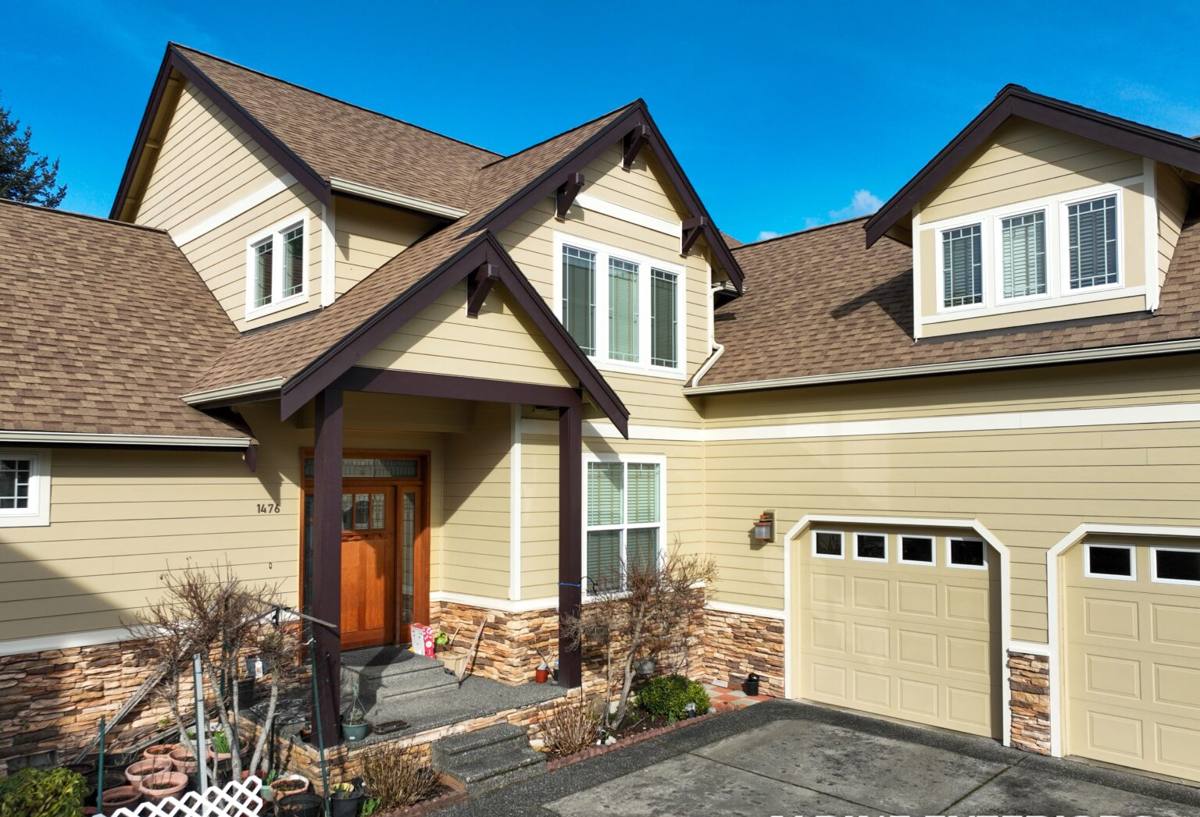
What Whatcom County Weather Does to Siding Over Time
Salt Air
Proximity to saltwater accelerates corrosion on fasteners, flashing, and any exposed metal trim tied into the siding system. When those components corrode and fail quietly behind the cladding, the siding above them starts to move, gap, or take on water — and by the time you see a visible problem on the surface, there's often already damage underneath.
Driving Rain
Wind-driven rain doesn't behave like a gentle vertical rainfall. It gets pushed sideways and upward into laps, seams, and butt joints that were designed for water running down a wall, not water being forced into it. Repairs that don't account for this — caulk smeared over a gap instead of proper flashing and lap technique — tend to fail again within a season or two.
A Long Moss Season
Shaded, north-facing, and tree-adjacent walls in this area can stay damp for much of the year. Moss and algae take hold on rough or porous siding surfaces and hold moisture directly against the material, which speeds up rot in wood-based products and accelerates paint and finish breakdown on almost anything.
Common Siding Repair Issues We See on Bellingham-Area Homes
| Symptom | Likely Cause | What a Correct Repair Involves |
|---|---|---|
| Soft or crumbling siding near the bottom of walls | Splash-back moisture, poor grade clearance, or failed caulking at the base | Remove and replace affected boards, correct clearance/flashing, reseal properly |
| Dark streaking or green growth on shaded walls | Moss/algae holding moisture, reduced sun exposure | Clean surface, address the moisture source, repair any softened material underneath |
| Paint peeling or bubbling on south/west walls | UV exposure combined with trapped moisture behind the finish | Assess substrate condition, repair damaged sections, refinish with a suitable exterior product |
| Gaps opening at butt joints or corners | Material movement, missing or degraded flashing, fastener corrosion | Reflash the joint correctly, replace corroded fasteners, re-fit or replace the board |
| Warping or bowing panels | Moisture intrusion behind the siding, often from a roof or window flashing failure | Trace the water source first, repair the source, then repair or replace the affected siding |
Repair or Replace? How We Make That Call
Not every damaged section needs a full re-side, and we don't push replacement when a targeted repair will genuinely hold up. But we also won't patch over a problem that's going to come back. Our approach on a Bellingham home usually comes down to three questions:
- Is the damage isolated to a few boards or areas, or is it showing up across multiple elevations?
- Is there an underlying moisture source — a roof leak, failed window flashing, gutter overflow — that needs to be fixed before any siding repair will last?
- What's the age and condition of the siding overall? Patching a few boards on siding that's otherwise sound is a reasonable, cost-effective repair. Patching a few boards on siding that's already failing broadly usually just delays a bigger job and costs more in the long run.
We'll tell you honestly which situation you're in. If a repair is the right call, we do the repair. If the siding is past the point where patching makes sense, we'll say so and explain why — not just push a bigger sale.
What a Correct Siding Repair Actually Involves
A repair that's done right addresses more than the visible damage. Here's what we check and correct as part of any repair job:
- Underlying substrate and sheathing — if water has been getting behind the siding, the sheathing or framing underneath may need attention before new siding goes back on.
- Flashing at joints, windows, and penetrations — a lot of "siding failures" are actually flashing failures. Replacing a board without correcting the flashing behind it just resets the clock on the same failure.
- Proper lap and clearance — siding needs the right overlap and the right clearance from grade, decks, and roof lines to shed water correctly. A repair is a chance to correct clearance issues that may have contributed to the original damage.
- Fastener condition — corroded or failing fasteners near the coast get replaced with appropriate corrosion-resistant hardware, not just reused.
- Color and material match — where possible, we match existing siding profile and finish so a repair doesn't stand out as an obvious patch.
Our Siding Repair Process
- On-site inspection. We look at the visible damage and check for signs of a moisture source behind it — this is the step a lot of quick patch jobs skip.
- Honest assessment. We tell you what's causing the damage, what a proper repair involves, and whether repair or partial replacement makes more sense.
- Written estimate. No surprise scope changes — if we find something once we open up the wall, we talk to you before proceeding.
- Repair work. Removal of damaged material, correction of the underlying issue (flashing, clearance, fasteners), and installation of matched replacement siding.
- Finish and cleanup. Paint or finish work as needed to blend the repair, and full site cleanup when the job is done.
Why We Steer Repairs Toward James Hardie Materials
We install James Hardie fiber cement siding exclusively for new installs and full re-sides, and that shapes how we approach repairs, too. When we're patching in replacement boards on an existing wall, we look for a fiber cement match wherever it's a sound option, because fiber cement holds up to this region's combination of salt air, driving rain, and prolonged dampness better than the wood or vinyl products a lot of older Bellingham homes were originally sided with.
Wood siding needs ongoing paint maintenance and is vulnerable to exactly the kind of moss-driven, moisture-trapped rot that's common here. Vinyl doesn't rot, but it can warp, fade, and crack in temperature swings, and it doesn't take paint well if you ever want to change the look. James Hardie's fiber cement is non-combustible, holds its factory ColorPlus finish far longer than field-applied paint, and is engineered in HZ product lines specifically for different climate exposures — which matters in a coastal-influenced county like Whatcom. When a repair area is large enough that matching old material isn't practical or durable, we'll walk you through what a partial or full Hardie re-side would look like, with real numbers, no pressure.
Why a Local Blaine Crew Matters for This Kind of Work
Siding repair is diagnostic work as much as it's installation work. A crew that works this area regularly has already seen how salt exposure, wind direction, and shade patterns play out on homes block by block in Whatcom County — which walls tend to take the worst of the weather, where moss shows up first, and which older siding installations are prone to the same flashing shortcuts. That local pattern recognition is what keeps a repair from being a guess. We're not driving in from out of the area to do a one-time patch job; this is the region we work in every week.
Cost Factors for Siding Repair
| Factor | Why It Matters |
|---|---|
| Extent of visible damage | A few boards versus multiple elevations changes labor and material scope significantly |
| Whether a moisture source needs fixing | Repairing flashing, a roof detail, or a gutter issue adds scope but prevents repeat failure |
| Wall accessibility | Second-story or obstructed walls take more time and equipment than ground-level sections |
| Material match availability | Matching an older or discontinued siding profile can add cost versus using a current product |
| Finish work needed | Painting or refinishing to blend a repair adds to the overall job |
Because every repair depends on what's actually happening behind the siding, we don't quote a number sight unseen — an honest estimate requires a look at the damage in person.
A Quick Self-Check Before You Call
If you're not sure whether your siding needs attention, walk your home's exterior and look for:
- Soft spots when you press on siding near the base of walls or below windows
- Visible gaps, cracks, or separated joints, especially at corners
- Persistent green or black staining on shaded or north-facing walls
- Peeling, bubbling, or chalky paint that keeps coming back after touch-ups
- Warped, bowed, or bulging panels anywhere on the exterior
- Water stains on interior walls or ceilings near exterior walls, which can point to siding or flashing failure
Any of these are worth a professional look before they get worse — especially heading into another wet Whatcom County winter.
If you're dealing with any of the issues above on a home in Bellingham, Blaine, or elsewhere in Whatcom County, we're glad to take a look and give you a straight answer on what's going on and what it'll take to fix it. Use the form below to request a free, no-pressure estimate.