 Blaine Exterior
 Board & Batten Siding Built for Bellingham's Climate
Board and batten has become one of the most requested siding styles for homes around Bellingham and the rest of Whatcom County, and it's easy to see why. The vertical lines read as clean and modern on a new build, but they also work beautifully on farmhouse-style remodels and craftsman homes that want a textured, dimensional look without going full shingle or shake. What most homeowners don't realize until they start pricing the job is that board and batten is a pattern, not a material — and the material behind that pattern matters enormously once you're dealing with Bellingham Bay's salt air, sideways rain off the Strait, and the long gray moss season that stretches from fall through spring.
We install board and batten in Bellingham the same way we install every other siding profile: exclusively in James Hardie fiber cement. This page is specifically about what that combination — this style, in this material, in this climate — actually requires to hold up and look right for decades, not just for the first few years.
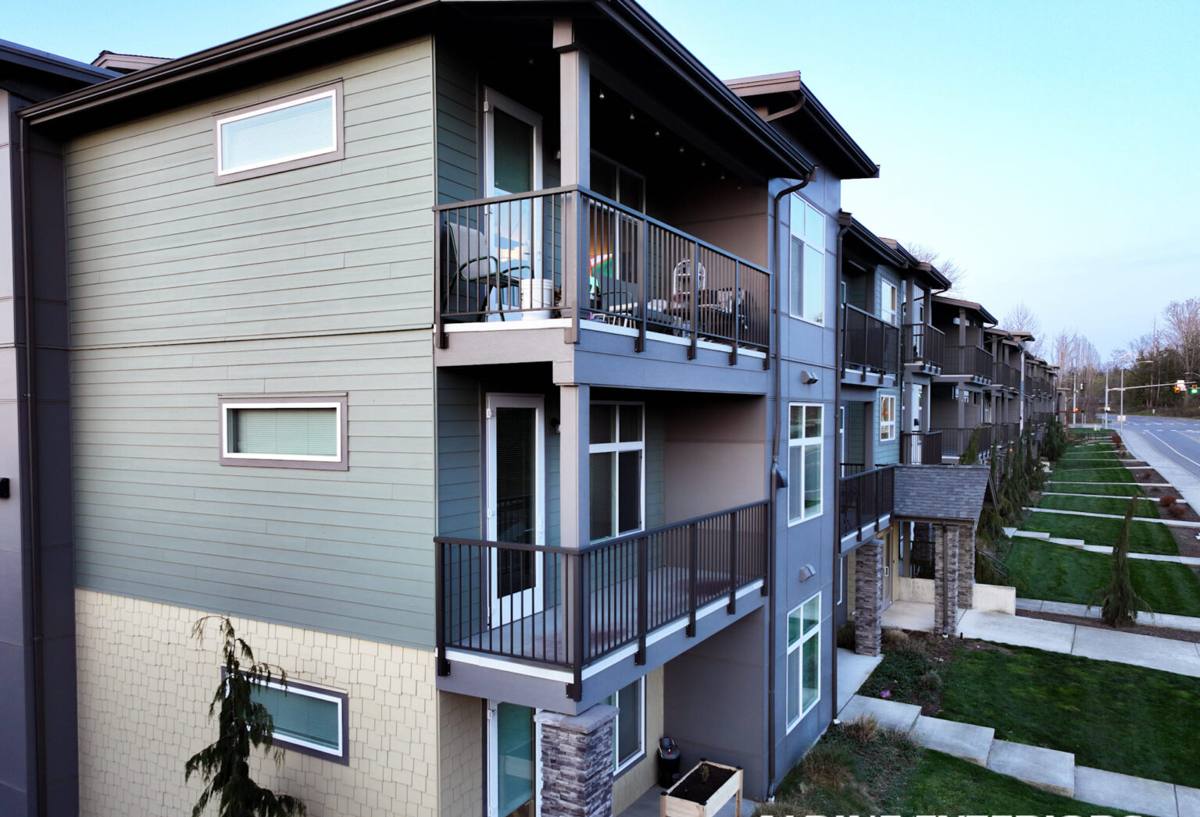
What Bellingham's Climate Actually Does to Vertical Siding
Board and batten's vertical boards and raised battens create a different moisture profile than horizontal lap siding. Water doesn't just sheet down and off — it can catch at every batten edge, every butt joint, and every point where a board meets a window or corner trim. In a drier inland climate that's a minor detail. In Bellingham, where marine air keeps humidity elevated most of the year and wind-driven rain comes in almost sideways off the water, those same details decide whether the siding lasts.
The three factors we plan around
- Salt-laden air: Proximity to Bellingham Bay means airborne salt accelerates corrosion on fasteners and metal flashing, and it degrades paint films faster than inland exposure.
- Driving rain: Storms pushing in off the Strait of Georgia hit north- and west-facing walls with real force, which is exactly where vertical batten joints are most exposed if they aren't detailed correctly.
- Moss and algae growth: Long stretches of damp, shaded weather from fall through spring create ideal conditions for moss and algae to take hold, especially on siding that stays shaded under eaves or tree cover.
None of these factors are unique to Bellingham, but the combination — coastal salt exposure plus sustained Pacific Northwest dampness — is more aggressive than what most siding products, and most installation crews, are set up to handle correctly.
Why the Material Behind the Pattern Is the Real Decision
Board and batten can be built from cedar, engineered wood, vinyl panel systems, or fiber cement. Each of those materials behaves differently once it's cut into narrow vertical boards and exposed to years of coastal weather. Solid wood battens move with moisture and temperature, which opens fastener holes and seams over time. Vinyl board-and-batten panels handle rain fine but are thin, flex in wind, and can look visibly artificial up close — a real consideration on a style that's supposed to read as substantial and architectural. Engineered wood products close the gap on appearance but still rely on wood fiber that needs consistent field sealing at every cut edge to keep water out, and vertical batten profiles create a lot of cut edges.
James Hardie fiber cement is what we've standardized on because it doesn't share those weaknesses. It's dimensionally stable, so battens stay flat and tight against the wall instead of cupping or bowing. It's non-combustible. And the HZ5 product line is specifically engineered for the kind of moisture and humidity cycling that defines a Whatcom County winter, rather than being a general-purpose product pressed into service here.
How a Correct Board & Batten Installation Actually Works
The finished look of board and batten hides almost everything that determines whether it lasts. The visible boards and battens are the last thing installed — everything underneath is what keeps water out.
What has to happen before a single board goes up
- Inspect and repair the sheathing and any existing water damage before covering it with new material.
- Install a weather-resistive barrier sized and lapped correctly for a vertical siding pattern.
- Build in a rainscreen air gap so water that gets behind the siding can drain and the wall can dry, rather than staying trapped against the sheathing.
- Flash every window, door, and penetration so water is directed out and down, not sideways behind the boards.
What has to happen during installation
- Boards and battens fastened per James Hardie's published pattern and spacing, not "close enough" spacing that looks fine but under-nails the field.
- Butt joints staggered and either flashed or backed, never left as a simple face-to-face seam.
- Battens sized and spaced to actually shed water off the joint below, not just placed for visual rhythm.
- Factory-primed cut edges re-sealed in the field wherever a board is trimmed on site.
- Corners, trim, and caulking done with sealants rated for the movement and moisture conditions of this climate.
Skip or rush any one of these steps and the siding can still look correct for a year or two. The failures that show up later — streaking at battens, soft spots at the bottom courses, paint failing unevenly — almost always trace back to something that was never visible from the ground.
The James Hardie Board & Batten System
We install board and batten using James Hardie's vertical siding panels with Hardie trim battens, finished in factory-applied ColorPlus Technology. That factory finish matters more on board and batten than on almost any other siding style, because vertical lines and repeated batten shadows make uneven color or touch-up paint far more noticeable than they would be on a horizontal lap profile. ColorPlus is baked on under controlled conditions, backed by its own finish warranty, and formulated to resist the UV and moisture cycling that breaks down field-applied paint over time.
James Hardie's HZ5 line is engineered for regions with significant moisture exposure — which covers Whatcom County and the broader Bellingham area — and the product carries a strong transferable limited warranty when installed to Hardie's specifications. That last part is important: the warranty is tied to correct installation, which is one more reason installation quality isn't optional.
Comparing Board & Batten Material Options
| Material | Behavior in Bellingham's climate | Long-term maintenance | Relative cost |
|---|---|---|---|
| James Hardie fiber cement | Dimensionally stable, resists moisture and salt-air degradation when installed to spec | Periodic washing; factory finish reduces repainting frequency | Mid-to-upper |
| Solid wood (cedar) | Attractive but moves with moisture; more prone to cupping and open joints over time | Regular refinishing, sealing cut ends, moss/mildew treatment | Upper |
| Engineered wood panel | Better stability than solid wood, but exposed edges need consistent field sealing | Moderate; edge sealing and finish upkeep | Mid |
| Vinyl board & batten panel | Handles moisture but can flex in wind and fade or become brittle with age | Low, but limited repair options if damaged | Lower |
Cost is only part of the comparison. What matters more for a coastal Whatcom County property is how each material performs after ten or fifteen winters of the same salt air and driving rain — which is the timeframe that actually determines value.
Our Process for a Bellingham Board & Batten Project
Every project starts with a walk-through of the existing siding and sheathing, not just a measurement for a quote. We're looking for prior water intrusion, soft sheathing, and any spots where past siding failed — those areas tell us where extra attention is needed underneath the new material. From there we plan the rainscreen and flashing details specific to the elevations that take the most weather, install the James Hardie panel and batten system to manufacturer specification, and do a final inspection of every seam, corner, and penetration before we call the job done. We also walk the homeowner through basic care — mainly seasonal washing to keep moss and algae from gaining a foothold — since a few minutes of upkeep a couple of times a year goes a long way in this climate.
What to Check Before Hiring for Board & Batten Work
- Ask whether the crew installs a rainscreen gap behind board and batten, not just a house wrap.
- Ask how butt joints and batten seams are detailed — a vague answer is a red flag on this particular style.
- Confirm the fastening pattern and spacing match the manufacturer's published installation instructions.
- Ask whether the warranty is tied to certified installation and what that means if a problem shows up later.
- Ask how many board and batten jobs the crew has done specifically in coastal Whatcom County conditions, not just siding in general.
Why Local Experience Matters for This Style
Board and batten punishes generic installation more than most siding profiles because its vertical joints and exposed battens leave less room for error. A crew that already works Bellingham and the surrounding Blaine area has seen firsthand which elevations take the worst of the wind-driven rain, where moss builds up fastest, and how salt air shows up first on fasteners and trim. That's not something you can fully compensate for with a generic installation manual — it comes from doing this work, in this climate, repeatedly.
If you're weighing board and batten for a home in Bellingham or anywhere else in the Blaine service area, we're happy to walk the property, look at your current siding condition, and put together a straightforward, no-pressure estimate using the form below.